
I adore the calm that minimalist decor brings to a room! Always searching for peace, I’m thrilled to share Japanese design’s beauty. It’s perfect for creating a serene home.
This style is known for its simplicity and natural charm. It’s ideal for those wanting a calm space. By adding Japanese design elements, you can make your home welcoming and peaceful.
We’ll dive into the philosophy and key elements of this design. I’ll also give you tips to bring it into your home. This way, you can create a peaceful haven.
The Philosophy Behind Japanese Home Decor
Japanese home decor is rooted in a deep philosophy. It focuses on living in harmony with nature and valuing the beauty of imperfection. This philosophy goes beyond making a space look good. It’s about creating a place that nourishes both our bodies and souls.
The Japanese way of decorating homes is guided by key principles. These principles help create a peaceful and balanced space. One of these is Wabi-Sabi, which means accepting and loving imperfection. It’s about seeing the beauty in the unique stories and histories of our belongings and surroundings.
Wabi-Sabi: Embracing Imperfection
Wabi-Sabi celebrates the beauty of imperfection. It finds charm in the worn, weathered, and aged. By embracing Wabi-Sabi, we can make our spaces feel real and welcoming. It connects us to the natural world.
Ma: The Importance of Negative Space
Ma is all about the value of empty space. It teaches us that space is just as important as the things in it. This helps us create calm and balanced environments. By using Ma in our designs, we can make our homes more peaceful.
Kanso: Simplicity and Clarity
Kanso is about simplicity and clarity. It encourages us to remove what’s unnecessary. This leads to a clean and efficient space that clears our minds and gives us a sense of freedom.
By combining these principles, we can make a home that reflects Japanese design philosophy. It becomes a place that supports our well-being. “The art of simplicity is a puzzle of life,” and embracing it can make our homes more serene and harmonious.
Essential Elements of Japanese Design
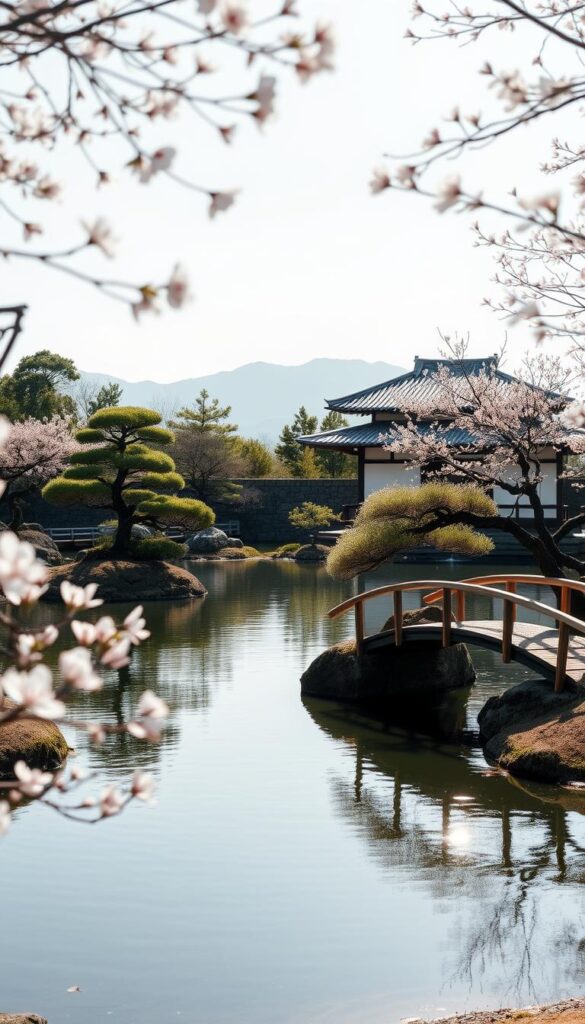
To capture the serene essence of Japanese design, focus on its core elements. Japanese design aims to create a harmonious and calming environment. It fosters a sense of well-being.
Natural Materials and Textures
Natural materials are key in Japanese design, adding warmth and authenticity. Wood, bamboo, and stone are favorites. They bring the outdoors in with their unique textures.
Wood, Bamboo, and Stone
Wood is often left in its natural state, showing off its grain and texture. Bamboo adds a light, airy feel. Stone, like granite or slate, brings solidity and earthiness.
Paper and Textile Elements
Paper and textile elements, like rice paper screens and cotton fabrics, add softness and subtlety. They filter light and create a delicate atmosphere.
Neutral Color Palettes
Neutral colors are a hallmark of Japanese design. Shades of white, beige, and gray provide a calm backdrop. They enhance the natural beauty of materials and create serenity.
Balance and Harmony
Achieving balance and harmony is key in Japanese design. It ensures all elements work together in perfect harmony. This balance brings tranquility, making spaces welcoming and relaxing.
Minimalism in Japanese Home Decor
Japanese minimalism is more than a design trend. It’s a lifestyle that brings peace and clarity. By simplifying and removing clutter, we make our homes serene and focused.
Decluttering Principles
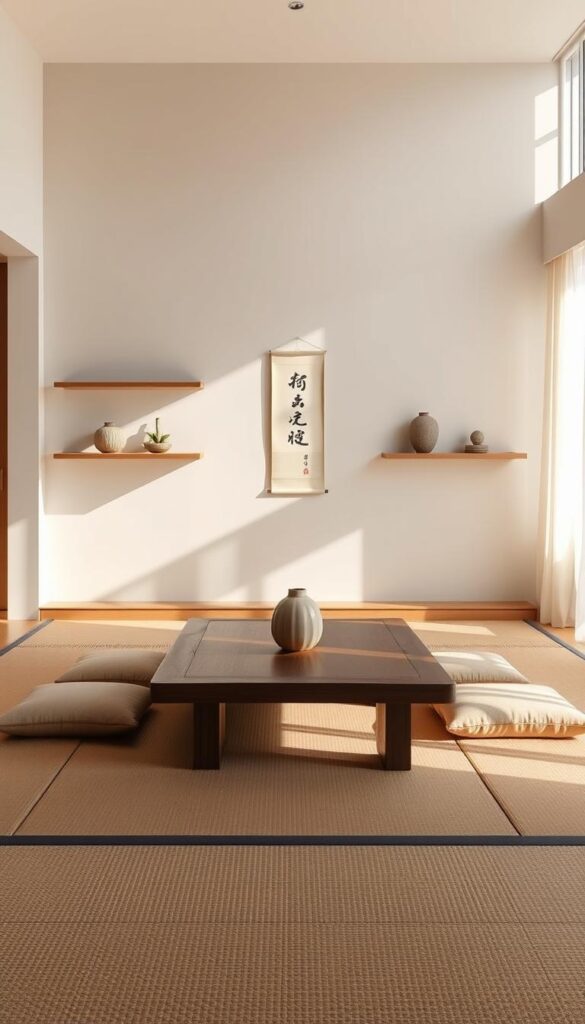
Decluttering is key in Japanese minimalism. It means getting rid of things we don’t need and organizing what’s left. This creates harmony and balance.
- Sort items into categories to understand what you have.
- Keep only items that serve a purpose or bring joy.
- Organize items in a way that maintains a clutter-free environment.
Functional Beauty
Functional beauty is finding beauty in useful objects. In a Japanese-inspired home, each item is chosen for its beauty and function.
Key elements of functional beauty include:
- Simple, unadorned designs that emphasize the material’s natural beauty.
- Multi-functional items that serve more than one purpose.
- A focus on the quality of craftsmanship.
Mindful Consumption
Mindful consumption means thinking carefully about what we buy. It’s about choosing items that are beautiful, meaningful, and necessary.
To practice mindful consumption, consider the following:
- Buy less, but choose items that are of higher quality.
- Consider the environmental impact of your purchases.
- Invest in timeless pieces instead of trendy items.
Creating a Japanese-Inspired Living Room
Creating a Japanese-inspired living room is about simplicity and natural beauty. It’s about making a space that feels calm and connected to nature. Think about adding elements that bring a sense of peace and tie you to the outdoors.
Low-Profile Furniture Selection
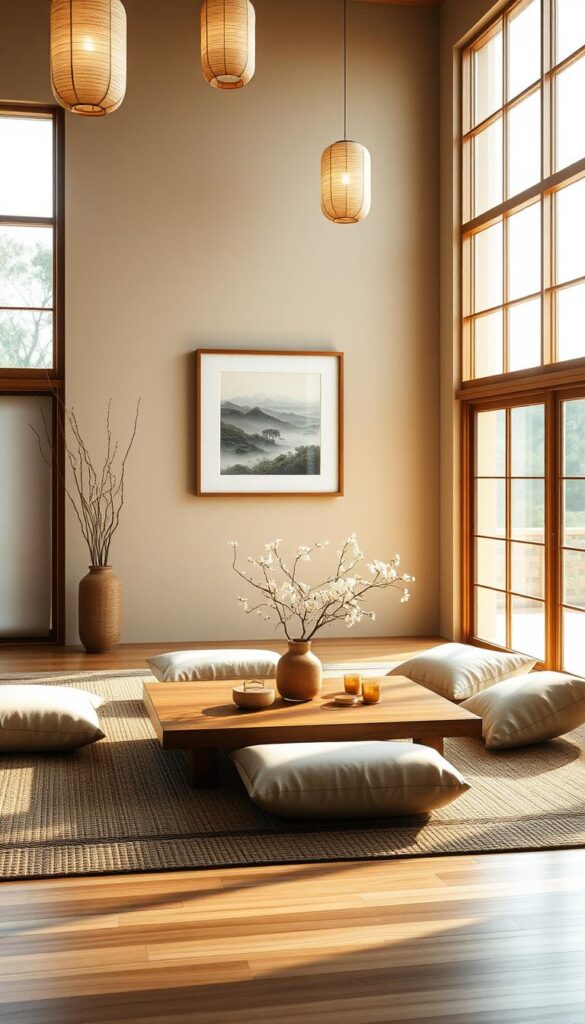
Low-profile furniture is key in a Japanese-inspired living room. It makes the room feel open and spacious. Choose sofas and chairs with simple designs and little cushioning for a clean look.
A low-seating sofa with natural wood can warm up your room. Adding floor seating, like cushions or stools, makes the space cozy and inviting.
Tatami Mats and Floor Seating
Tatami mats are a must in Japanese design. They make a seating area that’s both comfortable and peaceful. Adding tatami mats to your living room can make a cozy spot for relaxing.
Pair your tatami mats with floor seating, like cushions or chairs. This creates a balanced and harmonious room.
Shoji Screens and Room Dividers
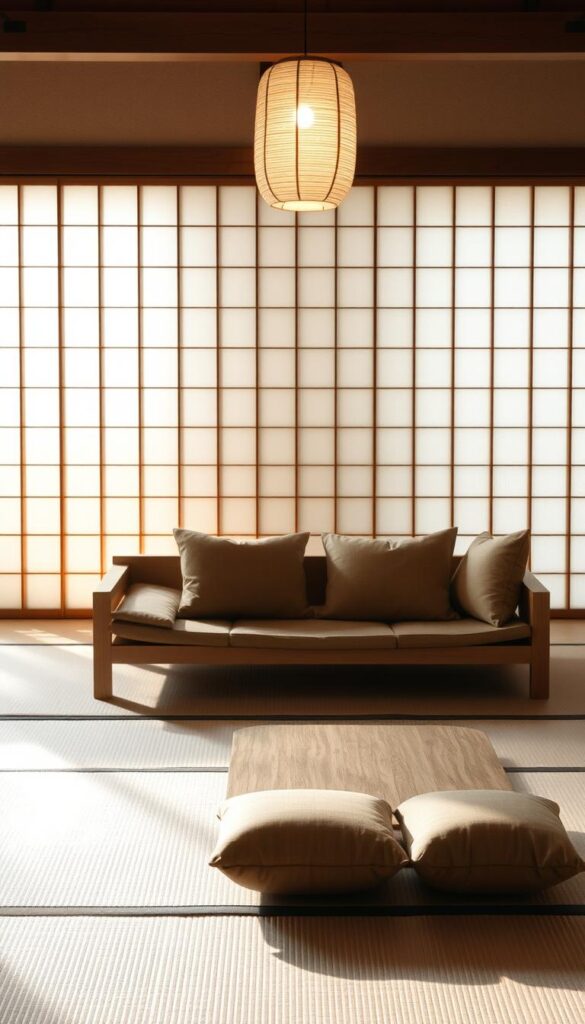
Shoji screens are vital in Japanese design. They help separate spaces and offer privacy. Made from natural materials, they can divide your living room into different areas.
Room dividers, like sliding panels or curtains, also work well. They add interest and create separate spaces in the room.
Lighting for Ambiance
Lighting is important in a Japanese-inspired living room. Choose soft, warm lights that make the room feel cozy and inviting.
Table lamps or floor lamps with linen shades are great for a warm glow. Candles or lanterns can also add to the peaceful ambiance.
Japanese Home Decor for the Bedroom
The bedroom is a place of peace, and Japanese design can make it even better. It can turn your bedroom into a calm retreat. Let’s explore how Japanese decor can make your bedroom a serene oasis.
The Japanese Futon and Bedding
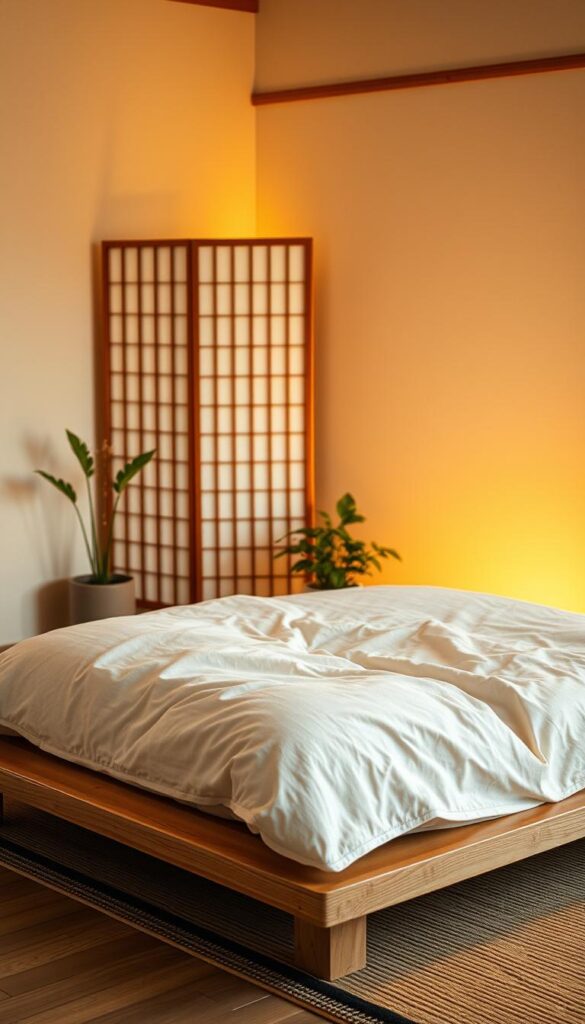
The futon is a key part of Japanese bedroom design. It’s a mattress on the floor, which makes you feel closer to the earth. It also helps your posture. Adding simple bedding, like cotton or linen sheets, makes the room even more peaceful.
Creating a Peaceful Sleep Environment
To make a peaceful sleep space, keep it simple and free from clutter. Use natural materials like wood and paper. Adding a small plant or a vase with branches brings nature inside. This helps create a calm atmosphere for restful sleep.
“A serene environment is not just a luxury, it’s a necessity for a good night’s sleep.”
Minimalist Storage Solutions
Keeping things simple is key in a Japanese-style bedroom. Use furniture that does more than one thing, like a storage bed or a wooden chest. This keeps your space tidy and calm, helping you relax.
- Use under-bed storage for bedding and out-of-season clothes.
- Choose a simple, low-profile dresser or chest of drawers.
- Consider a minimalist nightstand with a single drawer.
Zen-Inspired Bathroom Design
I’m excited to share my favorite ideas for designing a bathroom that feels like a spa retreat! A Zen-inspired bathroom can be your personal oasis. Here, you can unwind and rejuvenate. We’ll explore key elements of Japanese design that promote serenity and relaxation.
Ofuro: Japanese Soaking Tubs
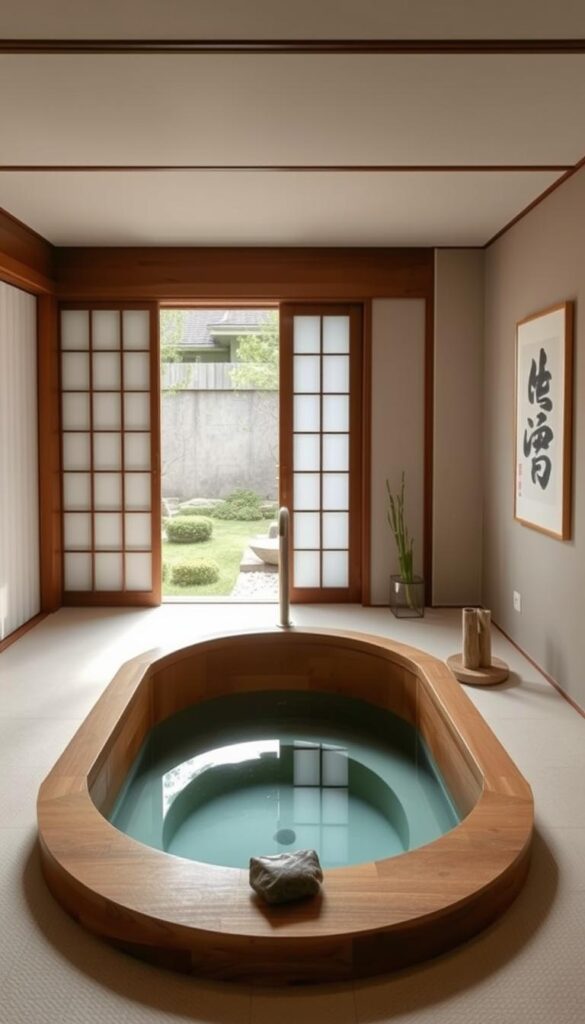
One of the most iconic elements of Japanese bathroom design is the Ofuro, or Japanese soaking tub. These deep, freestanding tubs are designed for a relaxing, immersive bathing experience. Ofuro tubs are typically made from natural materials like wood or stone, adding warmth and texture to the bathroom. By incorporating an Ofuro tub, you can create a spa-like ambiance in your own home.
Natural Elements in the Bathroom
Incorporating natural elements is key for a Zen-inspired bathroom. Consider using materials like:
- Stone or wood for the flooring or walls
- Plants like bamboo or moss to bring in greenery
- Natural textiles for towels and robes
These elements will help create a calming atmosphere. Your bathroom will feel like a serene retreat.
Minimalist Bathroom Storage
To maintain the serenity of your Zen-inspired bathroom, it’s essential to keep clutter at bay. Minimalist bathroom storage solutions like recessed cabinets, wall-mounted shelves, or hidden compartments can help keep your bathroom organized and peaceful. By embracing simplicity, you’ll create a space that promotes relaxation and calmness.
By incorporating these Japanese design elements, you can create a Zen-inspired bathroom that feels like a personal spa. Enjoy the serenity and relaxation that comes with a well-designed bathroom oasis!
The Japanese Kitchen and Dining Space
The Japanese kitchen and dining area are perfect. They mix simplicity, functionality, and a sense of community. This space is designed for more than just eating. It’s for connecting with family and friends.
Functional Kitchen Design
A Japanese kitchen is all about being efficient and simple. It has minimalist cabinetry and natural materials. It focuses on a few, important things, not clutter. The layout is made to make cooking easier, like a traditional Japanese tea ceremony.
- Streamlined countertops
- Efficient storage solutions
- Integration with dining areas
Traditional Dining Elements
Traditional Japanese dining adds warmth and closeness to meals. Two key parts are the Chabudai and Zabuton.
Chabudai: Low Dining Tables
Chabudai are low tables that make dining cozy and communal. They’re great for more than just eating, like working or playing games.
Zabuton: Floor Cushions
Zabuton are floor cushions for the Chabudai. They make sitting around the table comfortable. This brings everyone closer together.
Tableware and Presentation
Choosing the right tableware and how it’s presented is key in Japanese dining. Simple, natural materials like wood, bamboo, and ceramic are best. The presentation is simple, showing off the food’s quality.
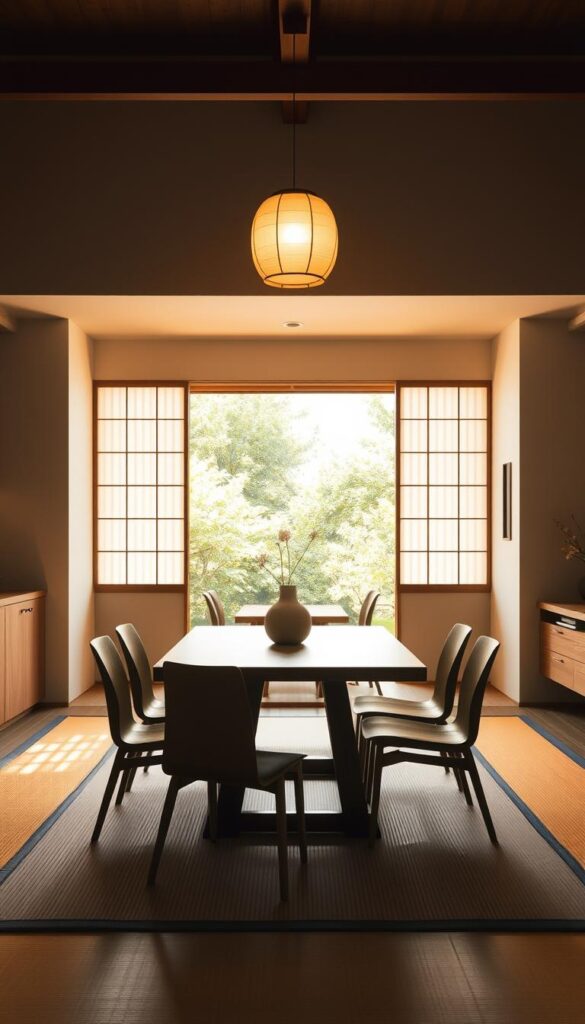
By adding these elements, you can make a Japanese-inspired kitchen and dining area. It will be both beautiful and useful. It encourages a sense of community and connection.
Indoor-Outdoor Connection in Japanese Design
Japanese design is known for merging indoor and outdoor spaces. It believes our homes should be in harmony with nature. This idea makes our living areas feel more connected to the outdoors.
Engawa: The Transitional Space
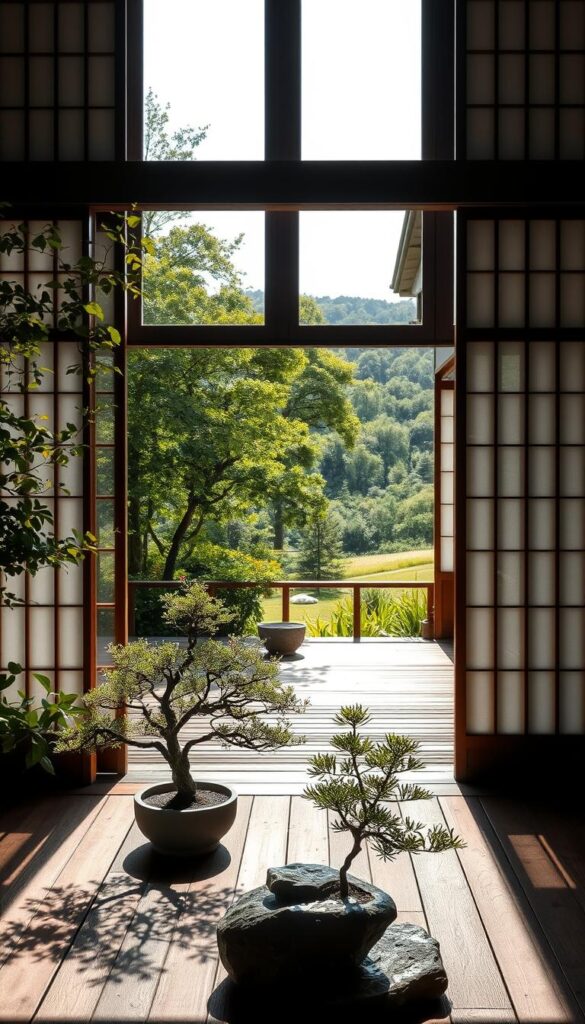
The Engawa is a special part of Japanese homes. It’s a space that connects the inside and outside. It’s like a veranda that goes around the house, showing the link between nature and our homes.
Incorporating Nature Views
Adding nature views to your home is key in Japanese design. Big windows and sliding doors let you see the outdoors from inside. You can enjoy a simple garden view or a wide landscape scene.
Indoor Plants and Miniature Gardens
Indoor plants and small gardens bring nature inside. They clean the air and make your home look better. Japanese gardens often feature:
- Bonsai Trees: These are tiny trees grown in pots, adding beauty to any room.
- Kokedama Moss Balls: A Japanese art where a moss ball holds a plant’s roots, often hung or placed in a dish.
Using these elements, you can make your home feel calm and natural. It helps mix the indoors with the outdoors.
Conclusion: Embracing Japanese Minimalism in Modern Homes
I love how Japanese minimalism can turn modern homes into peaceful places. It uses Wabi-Sabi, Ma, and Kanso to make homes beautiful and calming. This way, our homes become places of peace and renewal.
Japanese minimalism is more than just design. It’s a lifestyle that values simplicity and mindfulness. By using natural materials and simple colors, we make homes that help us relax and feel calm.
In our modern homes, we can use Japanese minimalism in many ways. We can declutter and use simple storage. We can also add traditional touches like tatami mats and shoji screens. This brings a sense of calm and peace into our daily lives.
As we aim to make our homes welcoming, let’s explore Japanese minimalism. By following its principles, we can make our homes peaceful retreats. They are perfect for unwinding and refreshing ourselves.