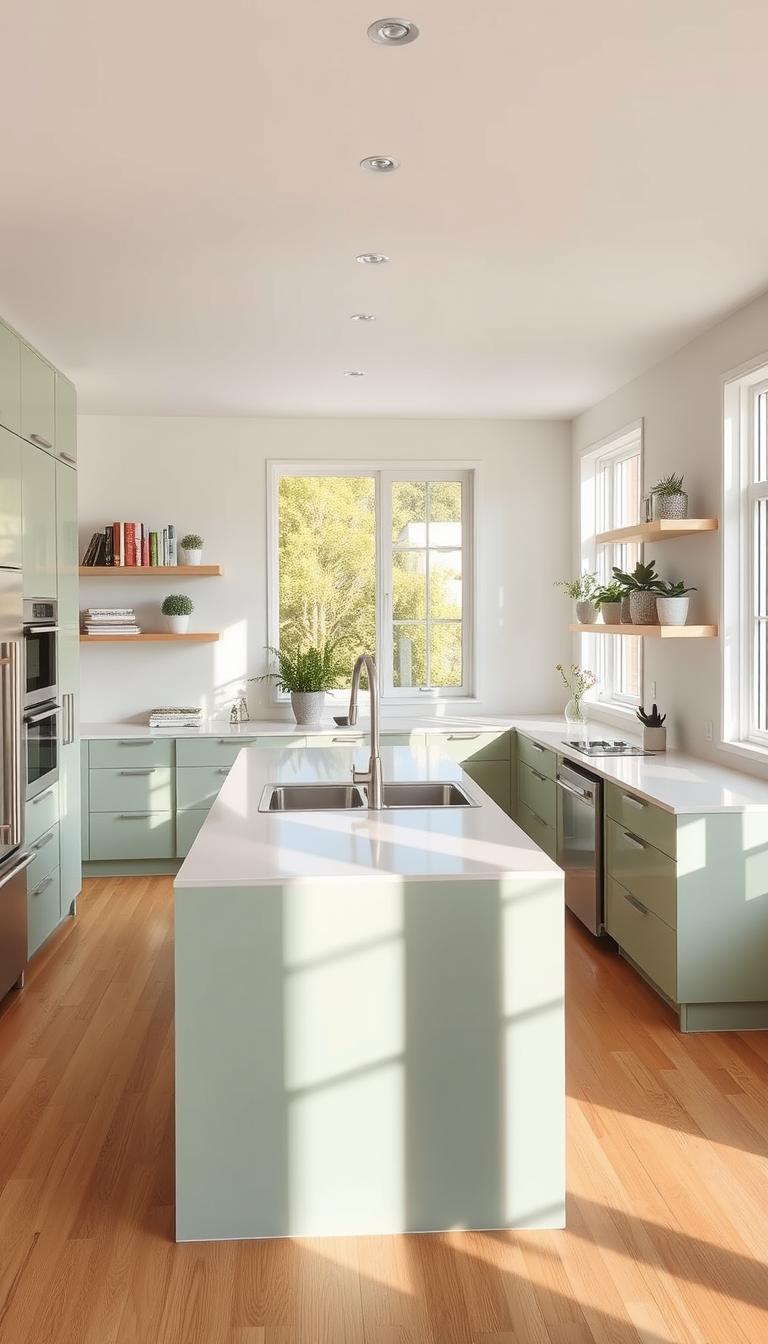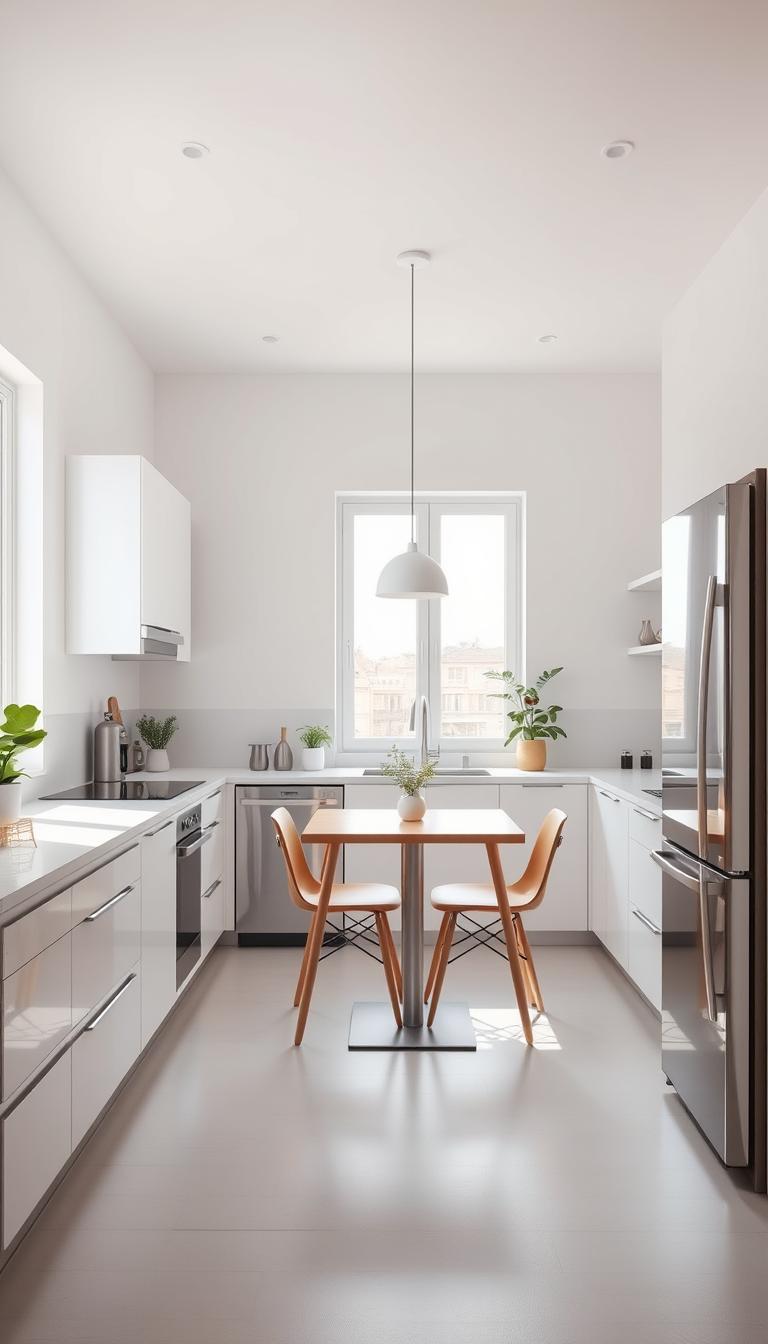
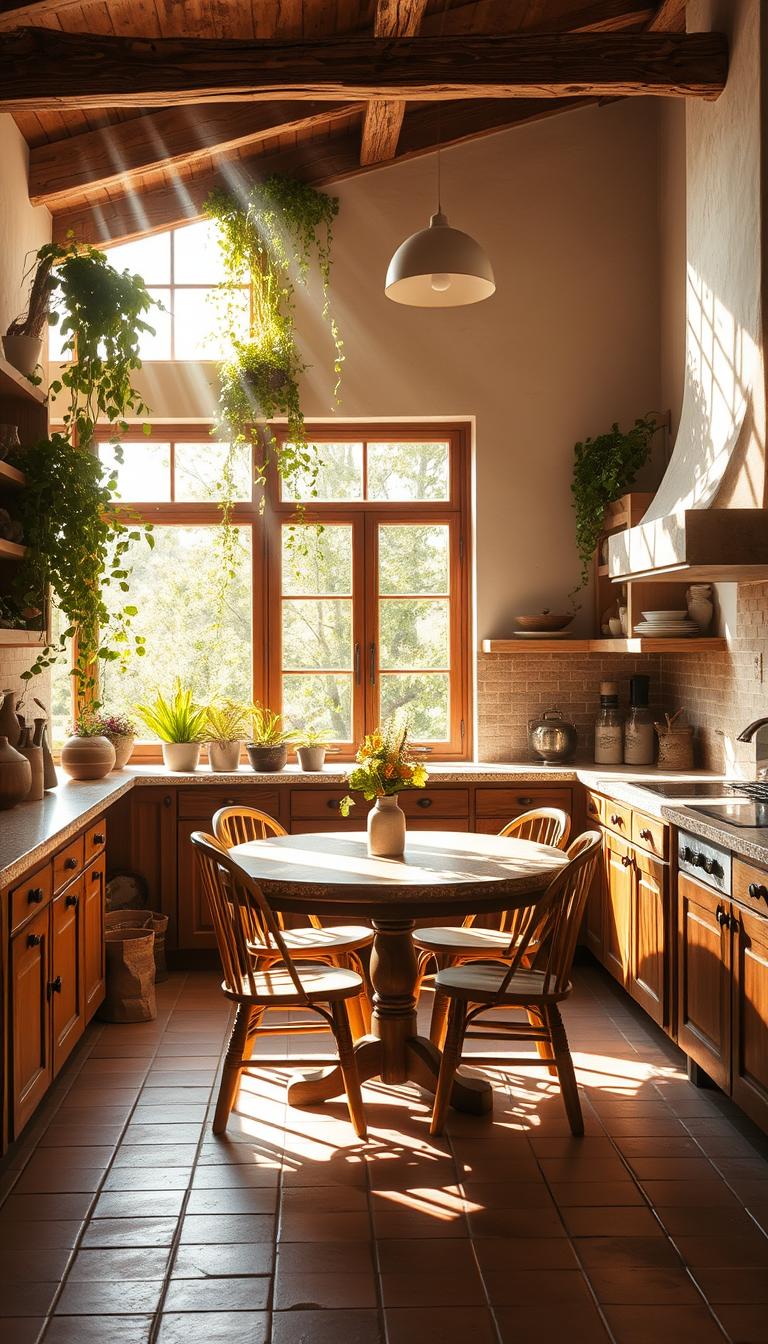
Have you ever walked into a kitchen and felt at peace? That’s what happens in an earthy kitchen! I’m excited to share design ideas that make your kitchen warm and inviting.
Natural kitchen design brings calm to your home. It uses warm wood, stone, and cozy colors. These elements make cooking special.
These kitchens are both timeless and modern. They mix rustic charm with modern needs. In this guide, I’ll show you how to add organic kitchen decor for a grounded, welcoming space.
Get ready to bring nature’s beauty into your kitchen!
1. Warm Wood Cabinets and Natural Grain Finishes
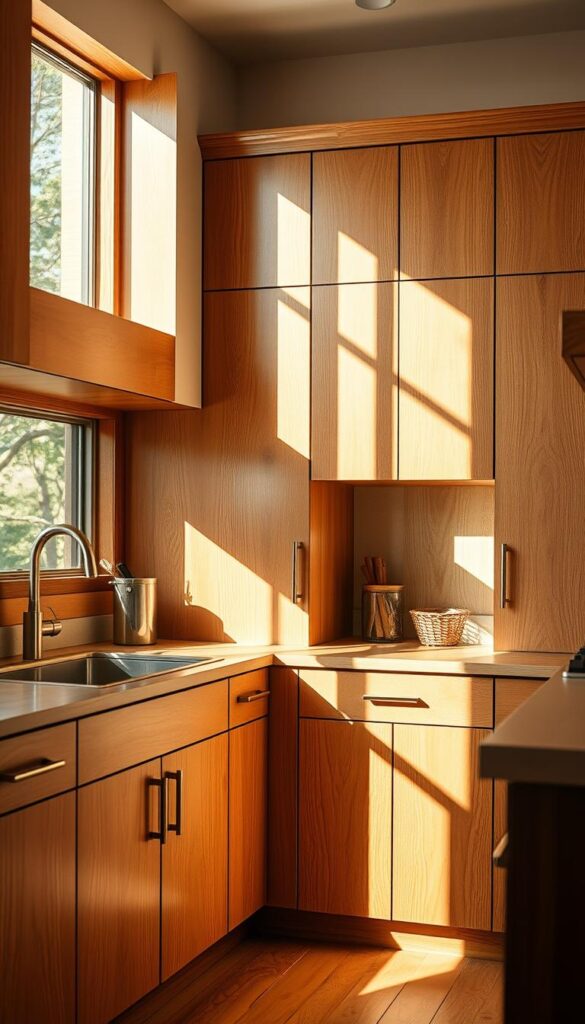
I love how warm wood cabinets make kitchens cozy and inviting. Wood kitchen cabinets are key to an earthy design. They add real character and beauty that fake materials can’t.
The natural grain patterns in quality wood tell a unique story in every cabinet door. Each knot, swirl, and variation adds personality, making your kitchen truly unique!
Choosing the Right Wood Species
When picking wood, I suggest oak, walnut, or hickory for their durability and beauty. Oak has classic appeal with big grain lines. Walnut offers rich chocolate tones with flowing patterns.
Hickory brings rustic charm with dramatic color variations, adding visual interest to your space.
Stain Options for Maximum Impact
Natural grain finishes shine with the right stain. I recommend honey tones for warmth, deep espresso for sophistication, or clear sealers to show off the wood’s beauty.
Each stain choice sets a different mood while keeping the earthy, organic feel we love.
Mixing Wood Tones Effectively
Don’t shy away from mixing warm wood tones! Try darker base cabinets with lighter uppers, or add a contrasting wood island.
This mix creates visual depth and avoids monotony, keeping your kitchen design harmonious.
2. Stone and Natural Rock Backsplashes
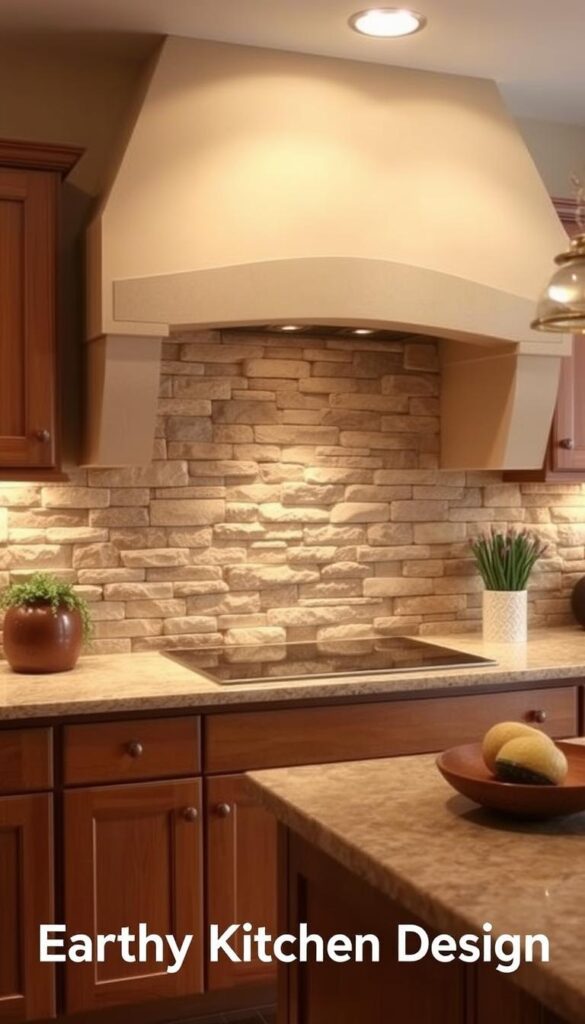
I love how stone backsplashes turn ordinary kitchens into cozy sanctuaries! These natural materials add texture and character that synthetic options can’t match. The way light moves across natural stone makes it a living focal point that changes with the day.
Popular Stone Types for Kitchen Backsplashes
Travertine is my favorite for its warm tones and natural pitting. This limestone is very versatile and looks great with both modern and rustic designs.
Slate has a layered look and rich colors. Its natural texture adds sophistication to any kitchen.
Natural fieldstone gives a real earthy feel with its unique shapes and patterns. These kitchen stone tiles share a special story with every installation.
Installation and Maintenance Tips
Getting a pro to install your natural rock backsplash is key. Sealing it right prevents water damage and stains, which are common near sinks.
Reseal your stone every 12-18 months, depending on how much it’s used. Clean it regularly with pH-neutral cleaners to keep it looking great.
Pairing Stone with Other Natural Materials
Wood shelving looks amazing against stone. The warm wood tones beautifully complement the cool stone for a perfect balance.
Copper accents add warmth and richness to stone. I love adding copper fixtures or hardware to enhance the earthy look and add interest.
3. Earthy Color Palettes That Transform Your Space
The right earthy kitchen colors can make your space amazing! I love helping you find colors that bring nature inside. The key is to mix colors in a way that feels both fancy and friendly.
Warm Neutral Base Colors
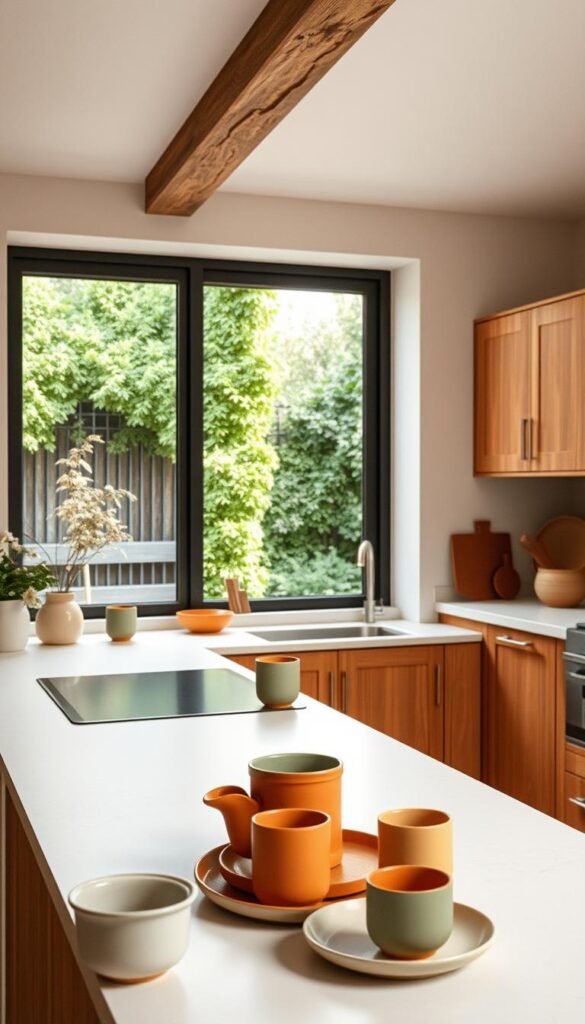
I start with warm neutrals for my earth tone kitchen designs. These colors let your natural materials stand out! My top picks include:
- Creamy whites with a hint of yellow
- Soft beiges that feel cozy
- Gentle grays with a warm touch
- Mushroom tones that mix gray and beige
These warm neutral colors are timeless and let your wood and stone shine. They make a calm background that’s never dull!
Adding Pops of Earthy Accent Colors
Now, it’s time for fun! I add nature-inspired colors to make your space unique. Deep forest greens add freshness.
Rich terracotta oranges bring warmth and energy. Soft sage greens make your kitchen feel like a spa. And don’t forget warm ochre yellows for a sunny vibe!
Color Coordination with Natural Light
It’s important to know how light changes your colors. I suggest testing paint in different lights throughout the day.
North-facing kitchens need warmer colors for cooler light. South-facing spaces can handle cooler earth tones. The goal is to match your colors with the outdoors!
4. Butcher Block and Live Edge Countertops
I’m really into butcher block countertops for their great looks and function. They warm up earthy kitchens and beat synthetic materials in practicality.
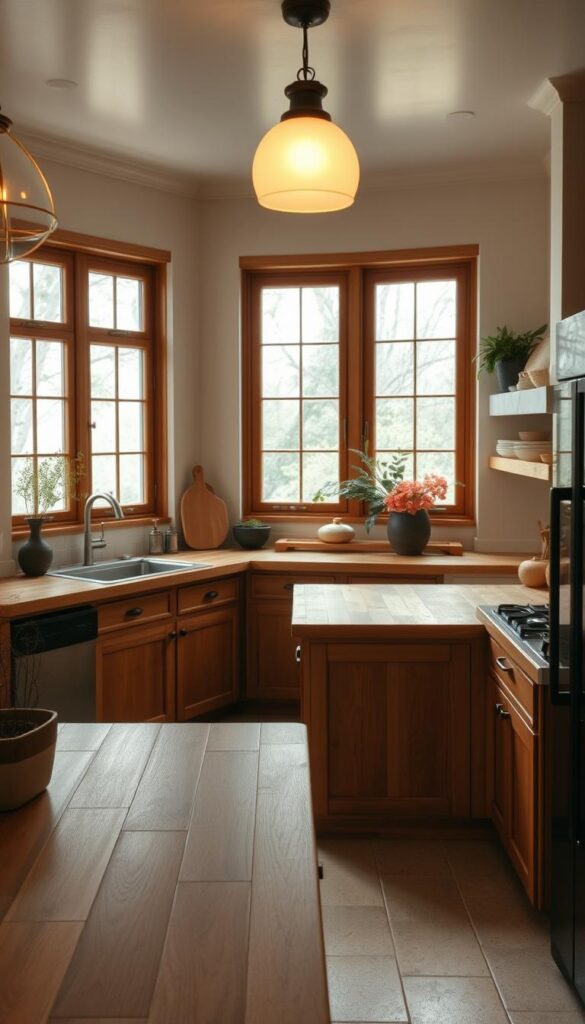
Live edge countertops go a step further. They keep the tree’s natural edge, making kitchens unique. The edges add a special touch that man-made surfaces can’t.
Benefits of Wood Countertops
Wood countertops are more than pretty. Here’s why I love them:
- Naturally antibacterial to keep your space safe
- Warm to the touch, unlike cold stone
- Gentler on dishes and knives during prep
- Can be sanded and refinished if needed
Maintenance and Care Requirements
Don’t worry about upkeep! Wood surfaces are easier to care for than you think.
Just oil them with food-safe mineral oil every few months. Consistency is key for keeping them looking great.
Design Variations and Edge Treatments
You can customize wood surfaces in many ways! Pick from modern, straight edges or rustic, hand-hewn ones for a cottage look.
Choose wood that matches your cabinets but also stands out. The choices are endless!
5. Clay and Terracotta Design Elements
I love adding clay and terracotta to kitchen designs. These materials add warmth and authenticity that synthetic options can’t match. Their organic textures and natural colors make kitchens feel sophisticated and grounded.
Ceramic kitchen elements are great because they’re sustainable. Clay is a renewable resource that looks better with age and can last for generations.
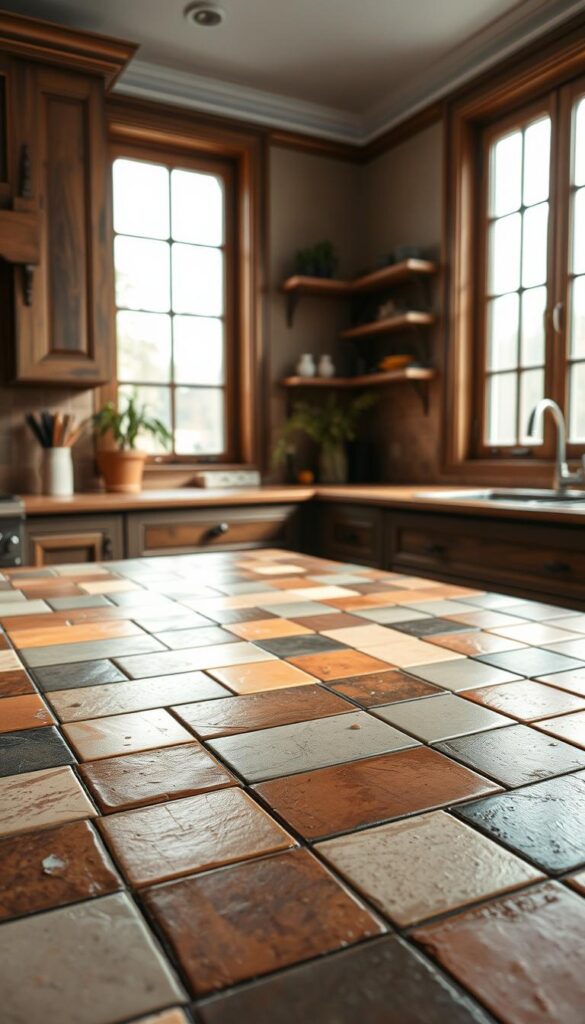
Incorporating Clay Tiles
Clay tiles kitchen installations are stunning. They can be used as backsplashes or flooring. Each tile has unique imperfections and color variations that add character.
These tiles are perfect for busy kitchens. They’re durable and maintain a handcrafted look.
Terracotta Pottery and Accessories
Terracotta kitchen decor brings beauty and function. Mixing different clay tones adds sophistication. These pieces connect you to traditional craftsmanship.
Using terracotta containers makes storage beautiful. They’re great for displaying herbs, storing utensils, or showing off fresh produce.
Handmade vs. Commercial Options
I suggest using handmade pieces for focal points and commercial options for larger areas. Handmade ceramics add personality and soul to your design.
| Feature | Handmade Clay | Commercial Clay | Best Use |
|---|---|---|---|
| Character | Unique variations | Consistent finish | Mix both styles |
| Cost | Higher investment | Budget-friendly | Strategic placement |
| Durability | Artisan quality | Standardized strength | High-traffic areas |
| Installation | Requires expertise | Easier application | Large surfaces |
6. Natural Lighting Solutions for Cozy Atmospheres
I love how the right lighting can turn any kitchen into a cozy, welcoming sanctuary. The key is to mix different light sources for depth and warmth. Lighting is more than just functional; it’s the heart of your kitchen design.
Lighting makes your natural materials shine. It brings out the beauty in wood cabinets and stone surfaces. It also creates magical moments when everything feels just right.
Maximizing Natural Light Sources
Natural kitchen lighting is essential! I help homeowners let in more sunlight. Start with natural linen or bamboo shades for filtered light and privacy.
Big windows or skylights are great if you can afford them. Even small changes, like light-filtering curtains, can brighten your kitchen. Removing obstacles can also make a big difference!
Warm LED and Edison Bulb Options
Warm LED bulbs in the 2700K to 3000K range are my top pick. They give that golden hour glow that makes everything look great! Edison bulbs add vintage charm and a warm ambiance.
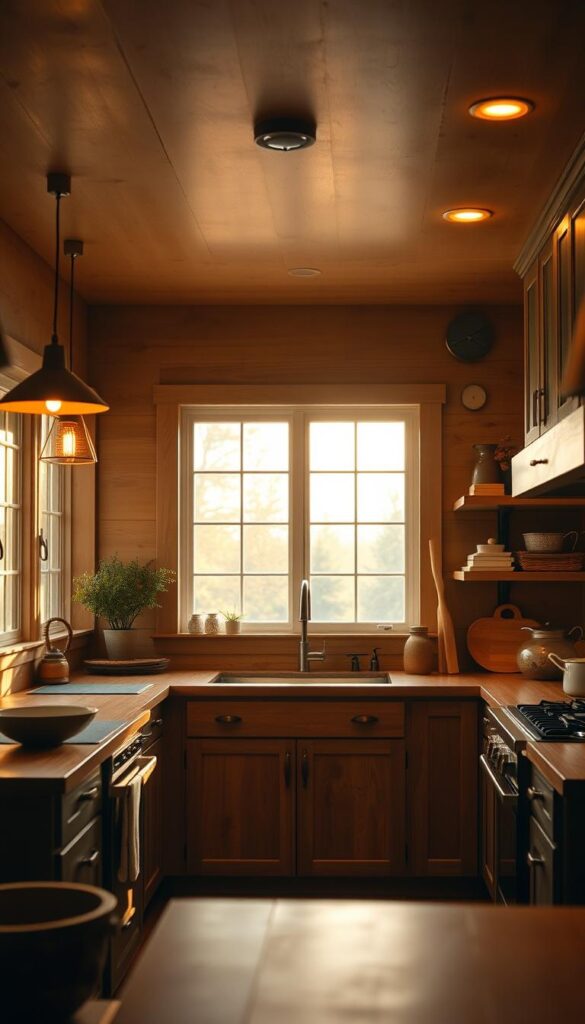
Dimmer switches are a must for warm kitchen lighting. They let you switch from bright task lighting to soft, romantic light for evening gatherings.
Pendant Lights with Natural Materials
Pendant lights made from natural materials are amazing! Think woven rattan, carved wood, or ceramic vessels that create beautiful shadows. These lights are art pieces during the day and add to the cozy atmosphere at night.
Use under-cabinet LED strips for task lighting, pendants over islands for a statement, and ambient ceiling lights. The goal is to have multiple lighting scenarios for different times and activities!
7. Open Shelving with Reclaimed Wood
I love how reclaimed wood shelving adds character and eco-friendly storage to kitchens. It’s special to give old wood a new life. The weathered look and natural marks tell stories that new materials can’t.
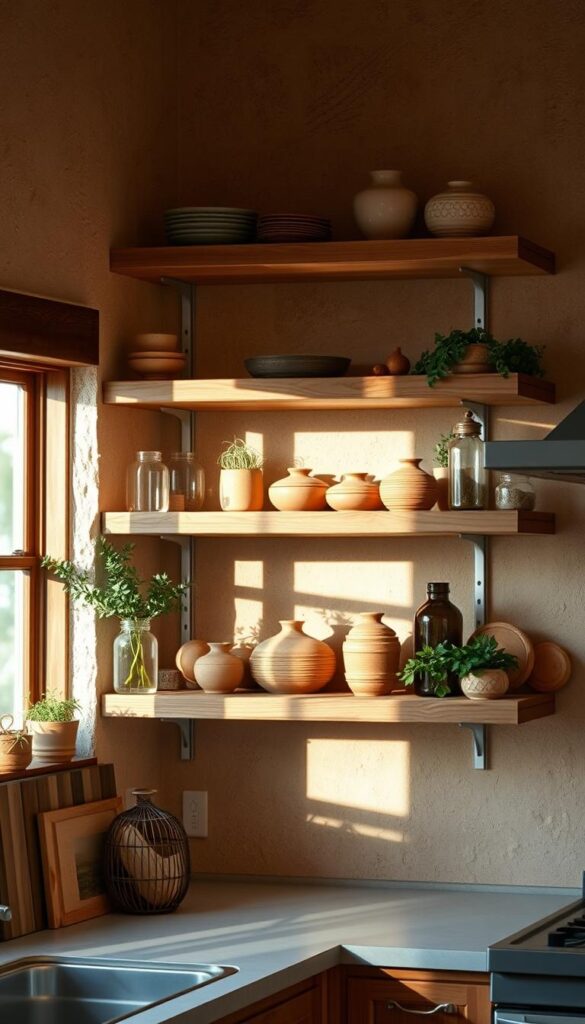
Styling Open Shelves Naturally
When styling open kitchen shelves, I aim for beautiful displays. I mix practical items with decorative ones. This includes ceramic bowls, wooden cutting boards, and vintage glassware.
I group items by height and texture for interest. Adding fresh herbs in small pots brings life and scent. Keep essentials within reach while showing off your favorites.
Sourcing and Preparing Reclaimed Wood
Finding quality reclaimed wood takes some effort! I visit local salvage yards, old barns, and specialty dealers. Each place offers unique character and history.
| Wood Source | Character Level | Cost Range | Preparation Needed |
|---|---|---|---|
| Salvage Yards | High | $15-30/sq ft | Extensive cleaning |
| Specialty Dealers | Medium | $25-45/sq ft | Minimal prep |
| Barn Wood | Very High | $20-40/sq ft | Heavy restoration |
Proper prep means cleaning, sanding, and sealing. This makes your shelves beautiful and safe for the kitchen.
Balancing Function and Aesthetics
Rustic kitchen storage must be practical and look good. I plan shelf placement for daily use and cooking habits.
“The best kitchen storage solutions are the ones you actually use every day, not just admire from a distance.”
Regularly edit your displays to avoid clutter. This keeps your kitchen looking lived-in and organic. The goal is to have storage that’s both useful and visually appealing!
8. Organic Shapes and Curved Design Features
Introducing curved kitchen design elements can make your kitchen feel magical. It moves away from sharp angles to softer, natural shapes. This creates a welcoming space that feels connected to nature.

Curved Kitchen Islands and Peninsulas
Curved kitchen islands are stunning and improve traffic flow. They replace sharp corners with smooth lines, making movement easier. Curved peninsulas also add to the organic feel, defining spaces without harsh edges.
These curves also make your kitchen more practical. They guide people around and create cozy spots for family chats.
Rounded Cabinet Hardware
Rounded pulls and knobs are more comfortable than sharp ones. I prefer hardware that looks like smooth river rocks or curved branches. These designs add comfort and beauty to your kitchen.
Flowing Design Lines
Flowing kitchen lines focus on smooth transitions between elements. This includes curved countertops, arched doorways, and curved backsplashes. The goal is to create a welcoming space without harsh lines.
| Design Element | Curved Option | Visual Impact | Functional Benefit |
|---|---|---|---|
| Kitchen Island | Rounded corners | Sculptural focal point | Better traffic flow |
| Cabinet Hardware | Organic shapes | Natural harmony | Comfortable grip |
| Countertop Edges | Soft curves | Gentle transitions | Safety improvement |
| Backsplash Pattern | Flowing lines | Movement and rhythm | Visual continuity |
These organic kitchen shapes turn your kitchen into a living part of your home. It’s no longer just a place to cook!
9. Natural Fiber Textiles and Window Treatments
I love how natural fiber textiles warm up spaces with stone and wood. They add a cozy touch that makes kitchens feel like home. This balance is key.

These materials age beautifully, gaining character with each use. They can’t be beat by synthetic fabrics.
Linen and Cotton Window Coverings
Linen kitchen curtains filter light and keep a relaxed vibe. Roman shades in linen make great focal points. Café curtains offer privacy without blocking light.
Cotton is great for families because it’s easy to care for. Both linen and cotton get more beautiful with age.
Jute and Sisal Rug Options
Jute kitchen rugs warm up your feet and define zones. Runners by sinks or big rugs in dining areas are perfect. They hide spills well.
Sisal rugs have more texture and are great for busy spots. Both fit well with earthy colors.
| Textile Type | Best Use | Maintenance Level | Durability |
|---|---|---|---|
| Linen | Window treatments | Medium | High |
| Cotton | Curtains, towels | Low | Medium |
| Jute | Area rugs | Low | High |
| Sisal | High-traffic rugs | Low | Very High |
Seasonal Textile Updates
I love changing up textiles with the seasons! Lighter fabrics for spring and summer. Fall and winter need warmer, cozier options.
Choosing pieces that grow character over time is key to earthy design.
Go for colors that match your kitchen’s palette. Add subtle patterns and textures for interest. This keeps your kitchen looking fresh all year.
10. Indoor Plants and Herb Gardens
Adding indoor herb gardens and greenery to your kitchen makes it truly magical. I love how kitchen plants turn a space into a living, breathing area. There’s nothing better than picking fresh basil for pasta or rosemary for your dishes.
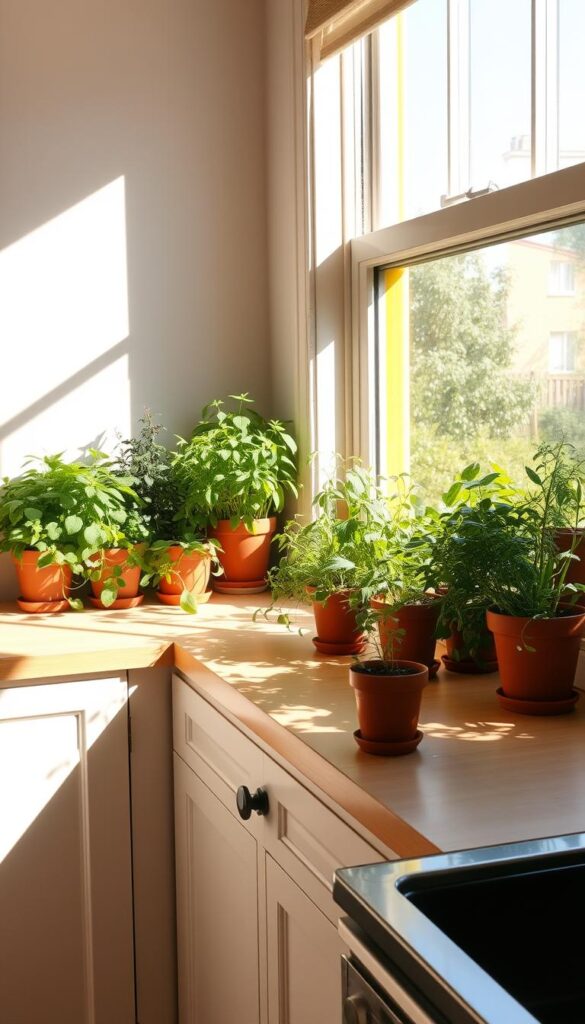
Best Plants for Kitchen Environments
Start with herbs that love the kitchen’s warmth and humidity. Basil, rosemary, thyme, and mint are perfect. They handle temperature changes well and add beauty to your space.
For non-edible plants, pothos, spider plants, and snake plants are great. They clean the air and fit well with a botanical kitchen design. They can handle different light and occasional forgetfulness about watering.
Creative Planting Solutions
I enjoy finding unique ways to add plants to your kitchen. Hanging planters from ceilings create beautiful vertical gardens. Wall-mounted indoor herb garden systems turn walls into living art.
Use vintage crates, ceramic pots, and woven baskets as planters. They add to your natural theme. Window sill gardens are great for herbs, while big plants can frame doorways.
Maintaining Healthy Indoor Gardens
Successful kitchen plants depend on knowing their needs. Most herbs like bright, indirect light and consistent moisture. Create a watering schedule to avoid too little or too much water.
Begin with three to five easy plants and grow your collection. The joy of fresh ingredients, cleaner air, and natural beauty makes it all worth it for any botanical kitchen design!
11. Designing the Perfect Earthy Kitchen Layout
Creating an earthy kitchen layout is like a dance. It blends natural elements with practical needs. I love making spaces where kitchen layout design shows off natural materials and meets daily cooking needs. The key is knowing how organic textures, flowing lines, and zones work together.
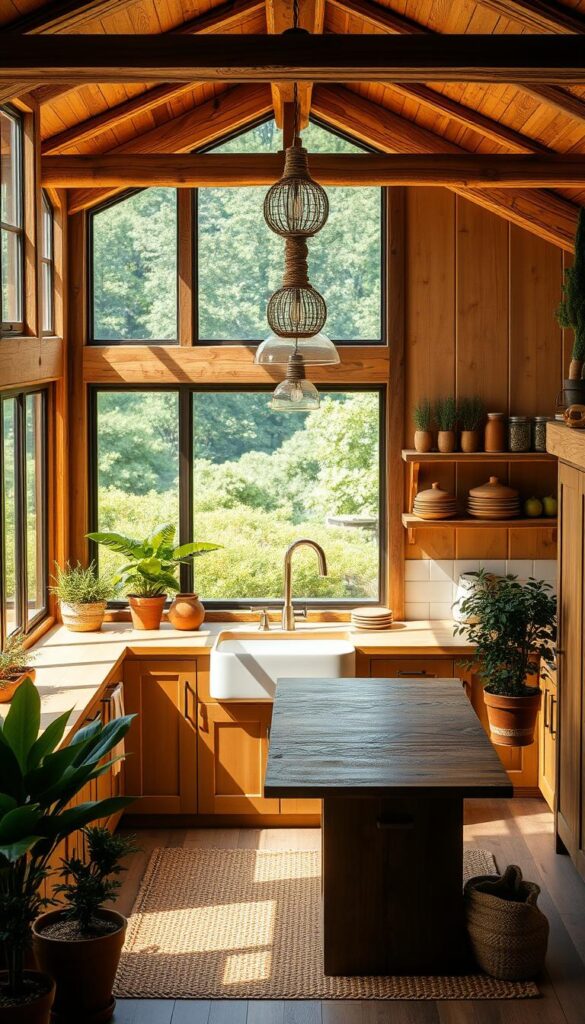
Your layout is key to making every natural element shine. When done right, it’s both beautiful and efficient!
Work Triangle Optimization
The work triangle is important, but I soften it with curved pathways. Instead of straight lines, use gentle arcs between sink, stove, and fridge.
Place your stone backsplash where you can see it from different spots. This keeps the look continuous and keeps functional kitchen flow. Make sure the triangle distances are 4-9 feet for best efficiency.
Flow and Movement Considerations
Earthy kitchens have varied textures that affect movement. I make walkways around islands at least 42 inches wide. This is important for natural stone floors that can be slippery.
Think about how cabinet doors and drawers open with your wood surfaces. Natural kitchen integration means every material choice should help, not hinder, movement.
Integrating Natural Elements Seamlessly
I create zones that feel connected but also distinct. Put your herb garden near prep areas and your live-edge island where it’s seen from other rooms. Make sure your reclaimed wood shelving is both beautiful and easy to reach.
As design expert Sarah Richardson said,
“The best kitchens are those where function and beauty dance together in perfect harmony.”
Every natural element should have a purpose. It should also add to your kitchen’s flow and beauty!
12. Conclusion
Your journey to an earthy kitchen starts with one step. Natural kitchen design tips are flexible and timeless. You can start with one element that means a lot to you.
Begin with warm wood accents or a few potted herbs on your windowsill. These changes make a big difference right away. They help you move closer to your dream kitchen.
Sustainable kitchen ideas don’t need a big overhaul. Try mixing reclaimed wood shelves with your old cabinets. Or, switch out harsh lights for softer Edison bulbs. Each change adds to the natural feel of your kitchen.
Trust your gut when picking materials and colors. Your kitchen should show your love for nature and meet your family’s needs. Natural materials like stone and wood have unique flaws that make your kitchen special.
Your earthy kitchen will be the heart of your home. It will make cooking fun and gatherings feel welcoming. Enjoy the journey, celebrate each small change, and watch your kitchen become something truly special.