Scandinavian design is one of the most beloved interior styles in the world — and for good reason. It blends minimalism with comfort, simplicity with warmth, and function with beauty. A Scandinavian living room is never cold or stark; it’s a space where you can relax, recharge, and enjoy life’s simple pleasures.
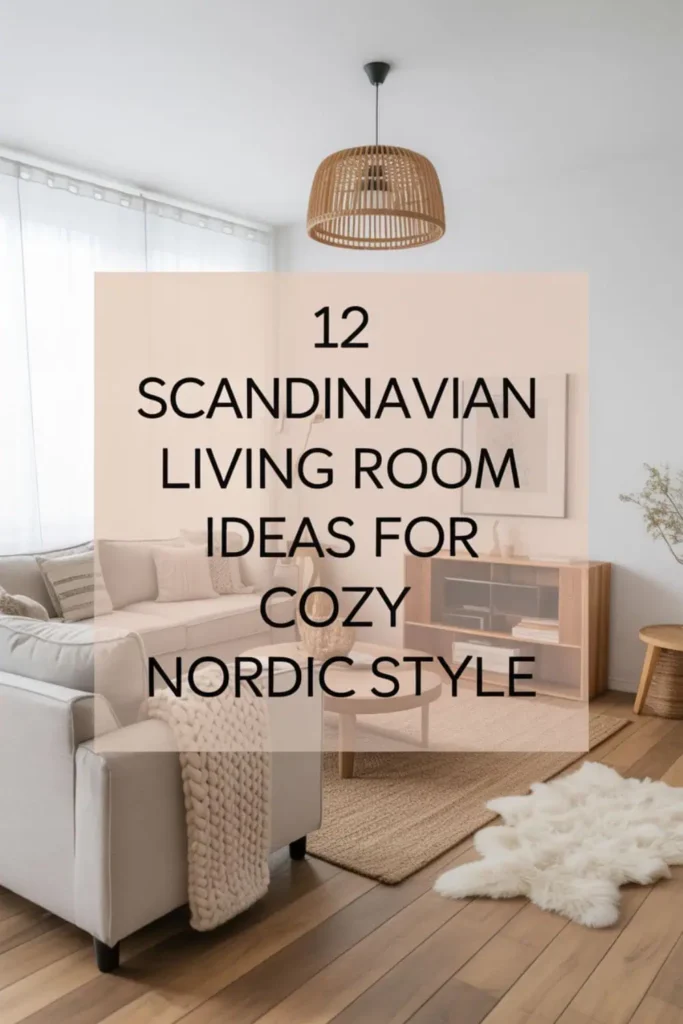
The secret lies in the Nordic concept of hygge — a Danish word that means creating a sense of cozy well-being in everyday life. By layering textures, embracing natural materials, and keeping your palette light and airy, you can design a space that feels both stylish and inviting.
Here are 12 thoughtful ways to bring Scandinavian style into your living room.
1. Start with a Light & Airy Color Palette
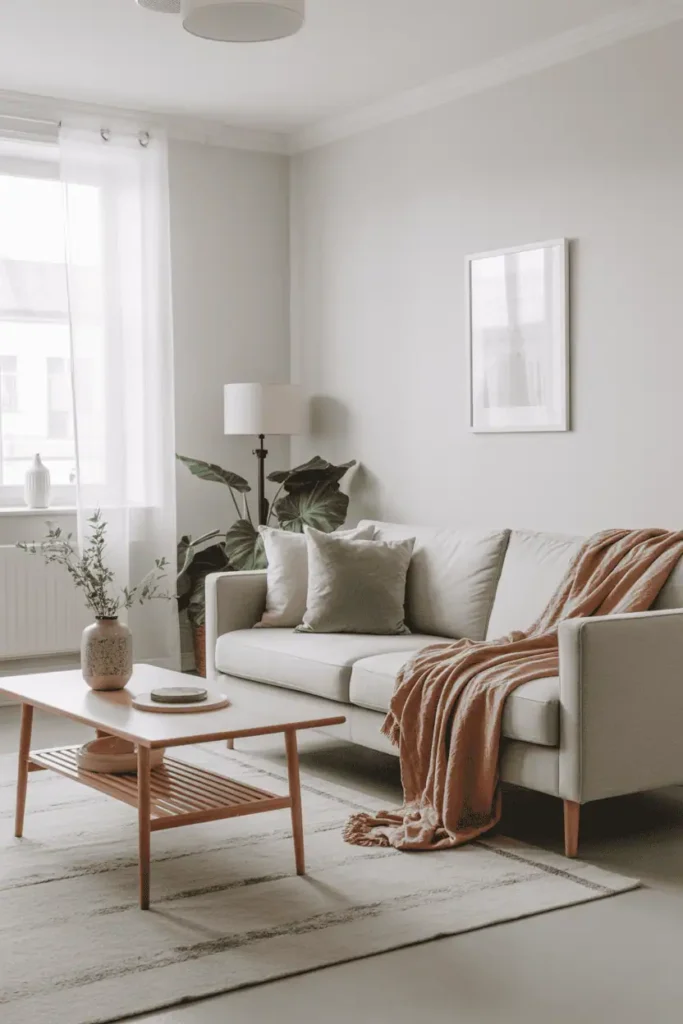
Color sets the tone for your Scandinavian living room. White walls are the classic starting point because they reflect natural light beautifully and make small spaces feel larger. But not all whites are the same — warm whites with cream undertones bring softness, while cooler whites enhance brightness.
To avoid a sterile feel, layer in soft neutrals like mushroom gray, taupe, and beige. These muted tones create depth while maintaining calm simplicity. For personality, add subtle accent colors such as dusty rose, sage green, or pale blue. Use them sparingly — in textiles, artwork, or ceramics — to add interest without breaking the minimalist aesthetic.
Pro Tip: Stick to the 60-30-10 rule (60% neutral base, 30% secondary tones, 10% accent colors) for balance and harmony.
2. Invest in Streamlined Furniture
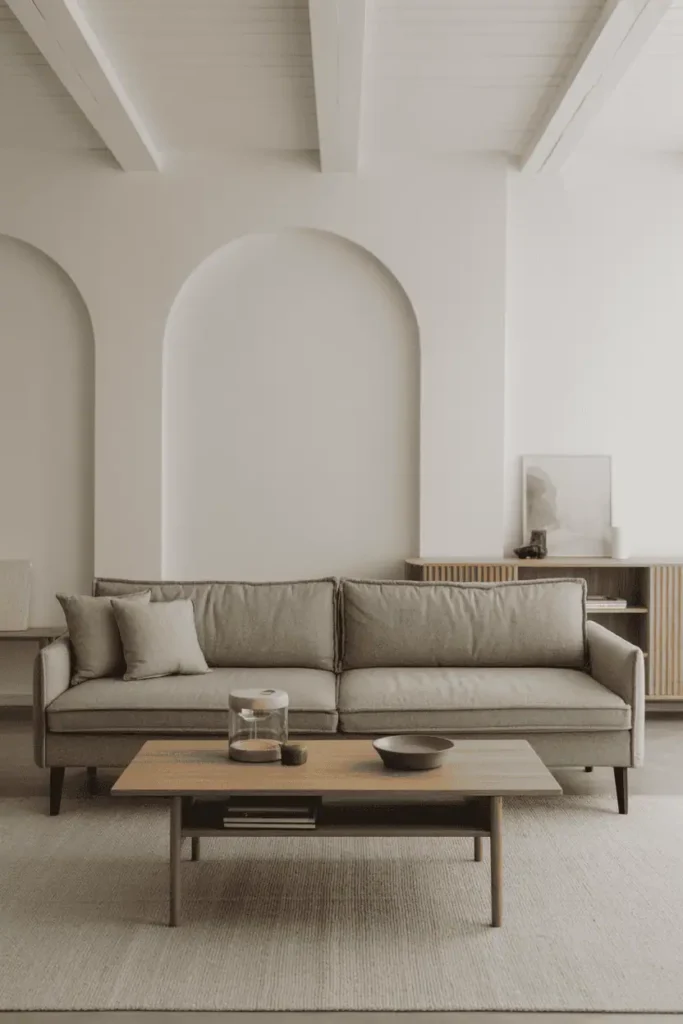
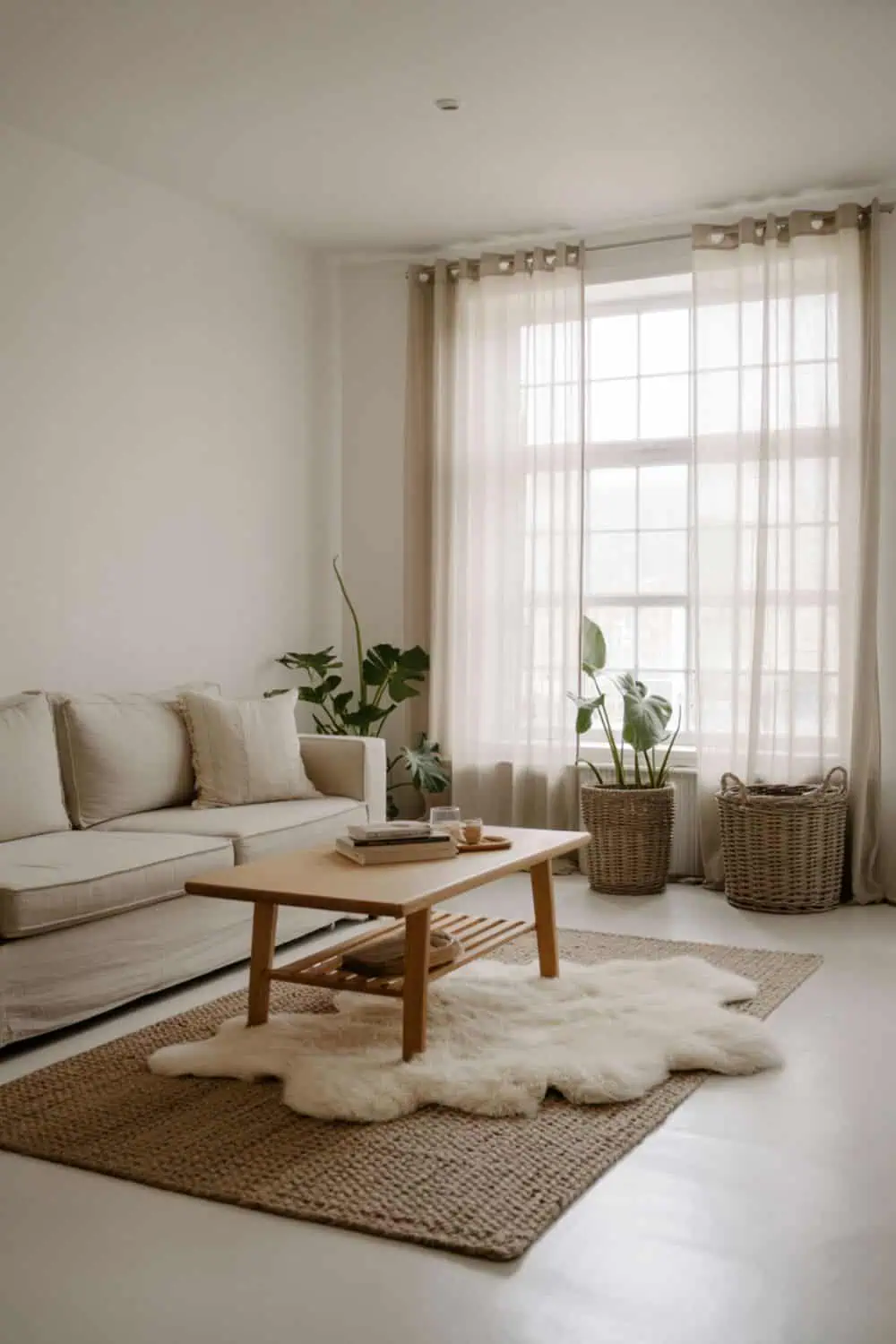
Furniture is the backbone of Nordic design — functional, beautiful, and never excessive. A Scandinavian sofa is usually low-profile, with simple shapes and light upholstery in gray, beige, or white. Pair it with wooden coffee tables in rounded or geometric forms to keep the look soft and flowing.
What sets Scandinavian furniture apart is versatility. Storage ottomans, slim benches, and media consoles with hidden compartments keep clutter out of sight while still looking stylish. Choose natural materials like birch, ash, or oak that age gracefully and complement a neutral palette.
Pro Tip: Avoid overfilling the room — negative space is part of the design. A few high-quality pieces are better than a crowded layout.
3. Layer Cozy Textiles for Hygge
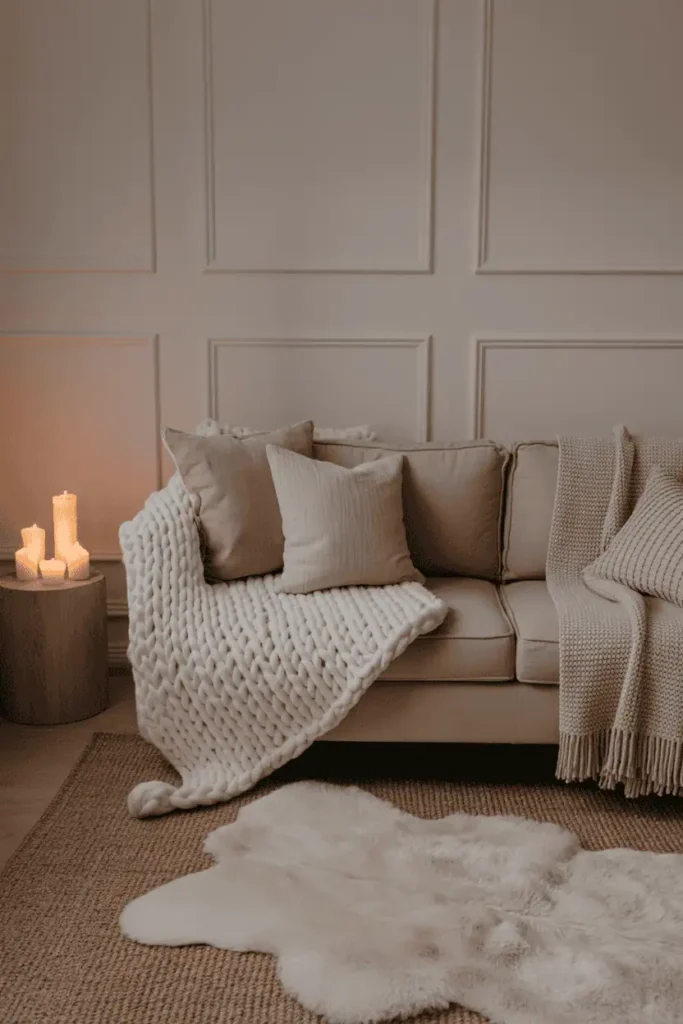
Hygge comes to life through textiles. Chunky knit throws, linen cushions, wool rugs, and faux sheepskins instantly make a minimalist room feel warm and welcoming. Layering different textures prevents the space from feeling flat and encourages relaxation.
Mix smooth fabrics (like linen curtains) with tactile ones (like bouclé cushions or velvet pillows). Play with sizes and layering: oversized cushions at the back, medium-sized ones in the middle, and smaller patterned ones in front.
Pro Tip: Don’t fold throws neatly — drape them casually over sofas and chairs to create a relaxed, lived-in vibe.
4. Embrace Natural Materials
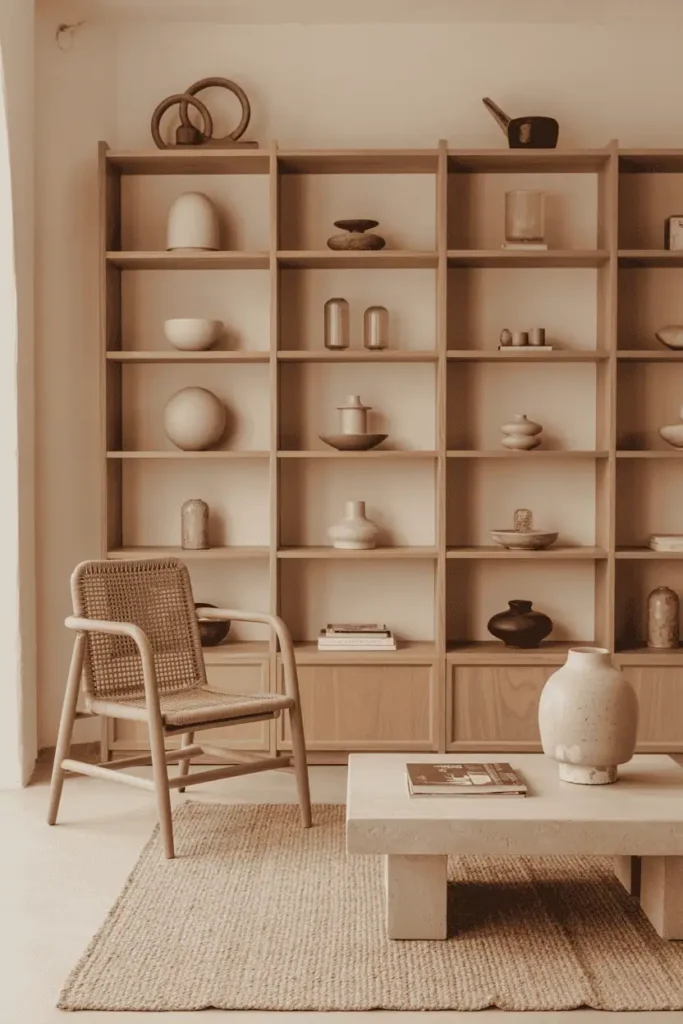
Scandinavian design is deeply rooted in nature. Light woods like birch, pine, and ash are staples because they bring brightness and warmth. Use them for furniture, shelving, or flooring. Pair with woven baskets, jute rugs, or rattan coffee tables to add organic texture.
Stone and ceramics balance the softness of wood and textiles. Think ceramic vases, marble trays, or a stone fireplace surround. These natural materials ground the space while keeping it authentic.
Pro Tip: Mix two or three natural textures in every vignette (for example, a wooden console with a ceramic vase and woven basket) for effortless balance.
5. Maximize Natural Light
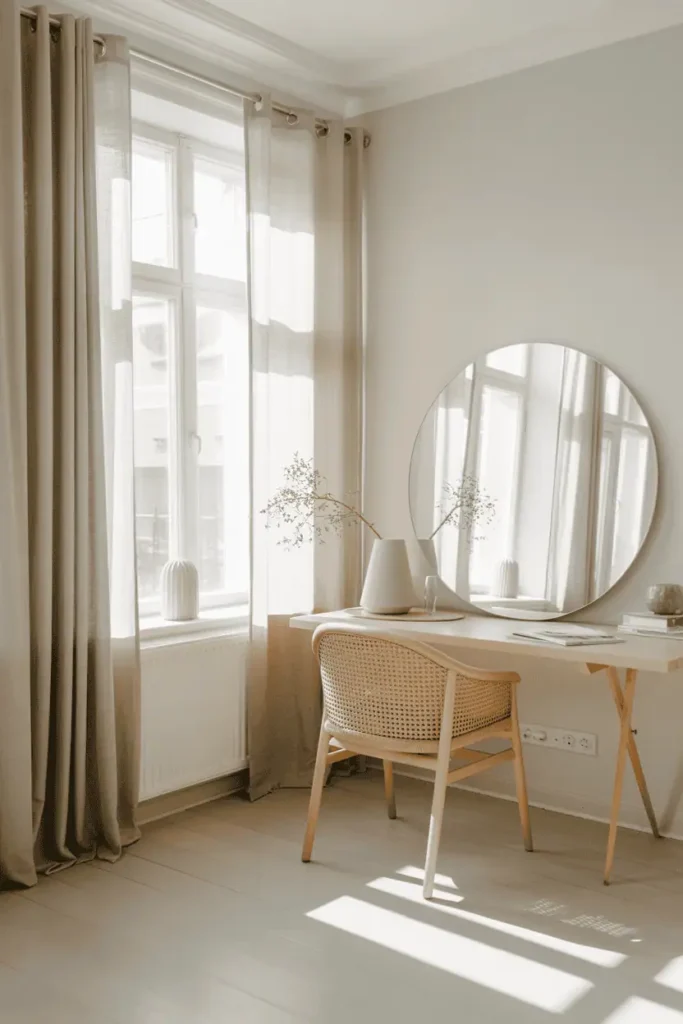
Scandinavians know how precious natural light is during long winters. That’s why their interiors are designed to make the most of it. Sheer linen curtains are ideal — they provide privacy without blocking sunlight. For more control, add pale wooden Venetian blinds that complement your furniture.
Mirrors are another Scandinavian trick. Placed opposite a window, they double the amount of light in a room and make small spaces feel larger. Choose simple round or oval mirrors with wooden or black metal frames for a timeless look.
Pro Tip: If your room doesn’t get much daylight, use warm-toned LED bulbs that mimic natural light to keep the hygge atmosphere alive year-round.
6. Layer Your Lighting
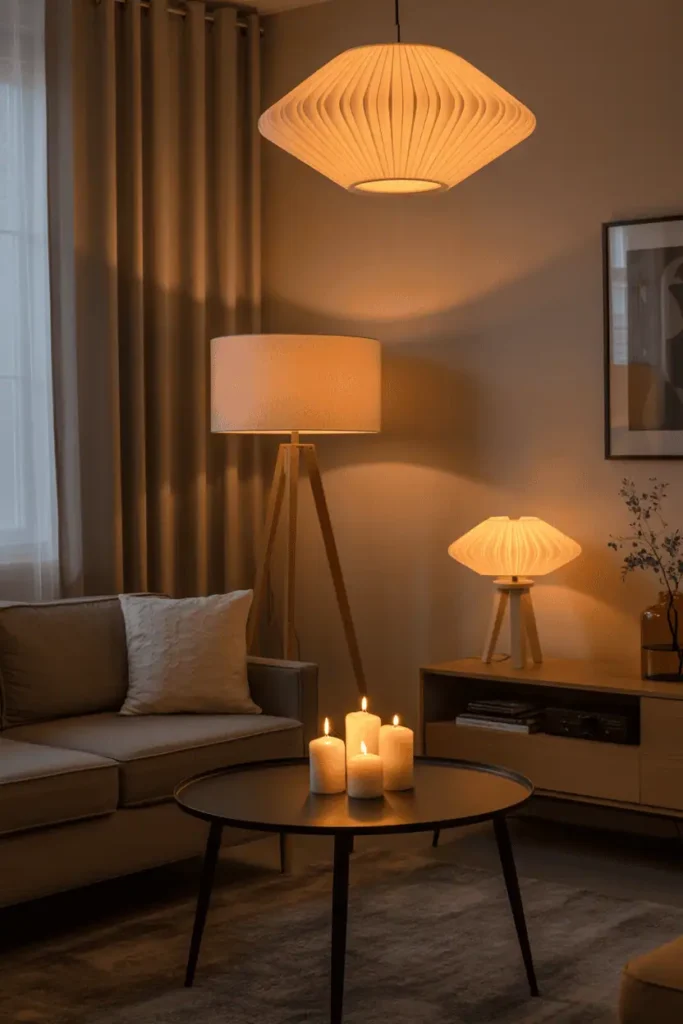
When the sun sets, lighting transforms your living room. Instead of one overhead fixture, Scandinavians use multiple light sources to create layers of ambiance. Combine statement pendant lights with floor lamps and table lamps, all in warm tones.
Candles are a must. Cluster them in groups of three or five on coffee tables, shelves, and windowsills. The flickering glow adds instant intimacy and hygge charm.
Pro Tip: Favor lamps with natural materials (wood, ceramic, rattan) or simple matte finishes to stay consistent with the Nordic aesthetic.
7. Add Sheepskin Rugs & Soft Accents
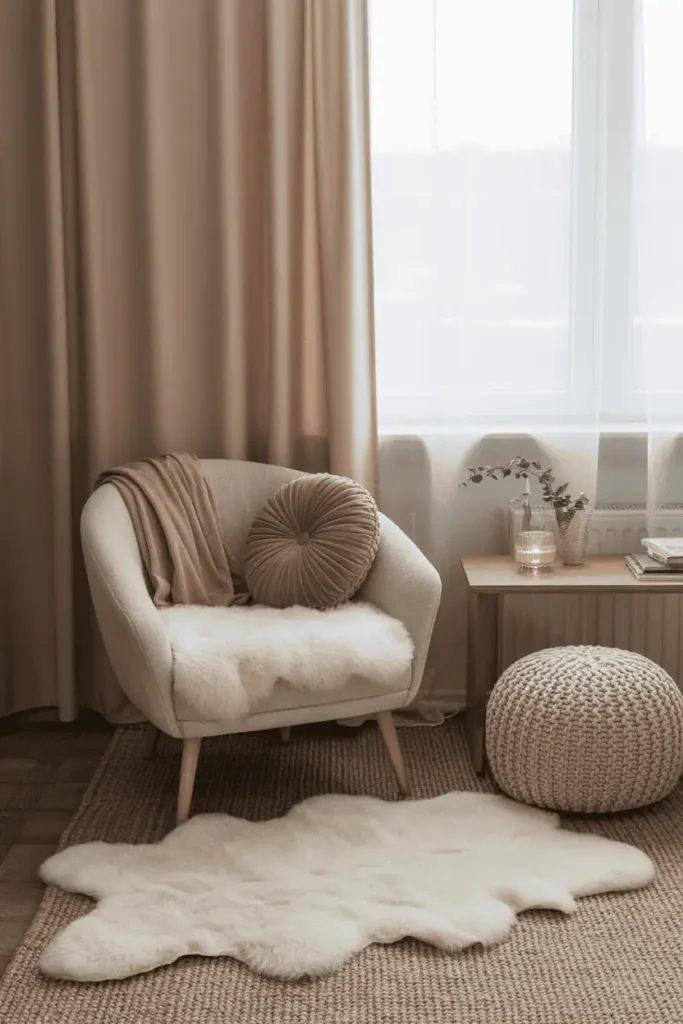
Nothing says Nordic comfort like a sheepskin rug draped over a chair or layered on the floor. These tactile accents add warmth, softness, and a sense of everyday luxury. Faux fur is a great alternative if you prefer a sustainable option.
Pair sheepskins with corduroy throws, velvet cushions, or wool poufs to enhance the layered look. Keep the palette muted — cream, gray, or soft brown — so the textures remain the star.
Pro Tip: Use sheepskins on dining chairs to make even mealtime feel cozy and inviting.
8. Curate Wall Art with Simplicity
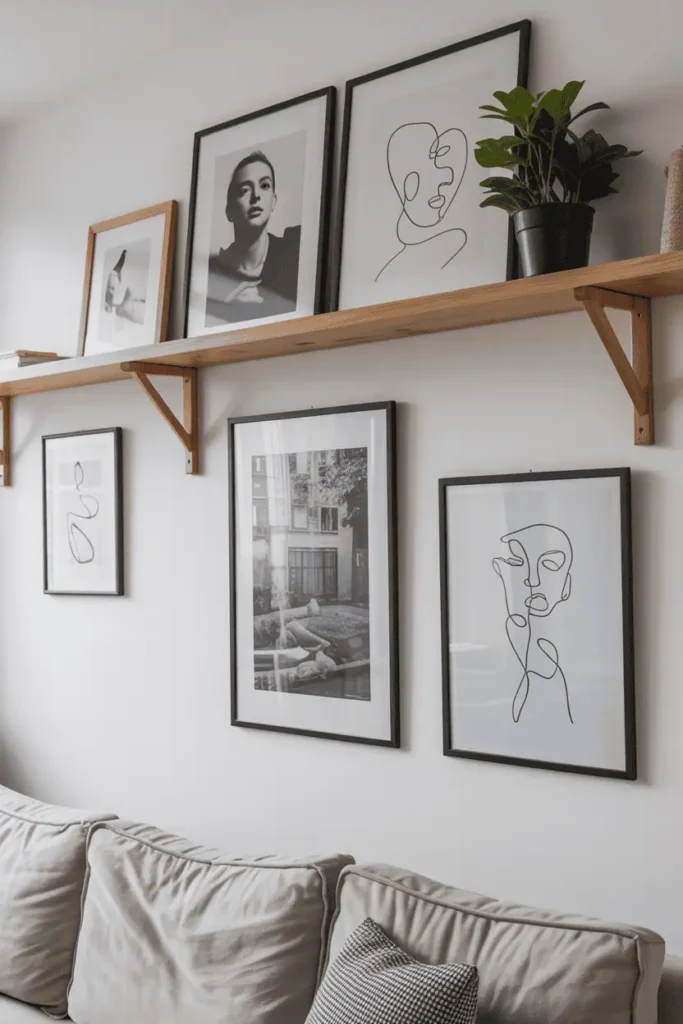
Nordic wall art is about quality over quantity. Instead of filling every inch of space, choose a few meaningful pieces. Black-and-white photography, minimalist line drawings, or botanical prints work beautifully.
Gallery walls are popular, but keep them balanced with matching frames and a simple color palette. Floating shelves are also great for rotating seasonal decor without committing to permanent pieces.
Pro Tip: Stick to natural frames (wood, black, or white) and keep spacing even for a clean, cohesive look.
9. Bring in Greenery
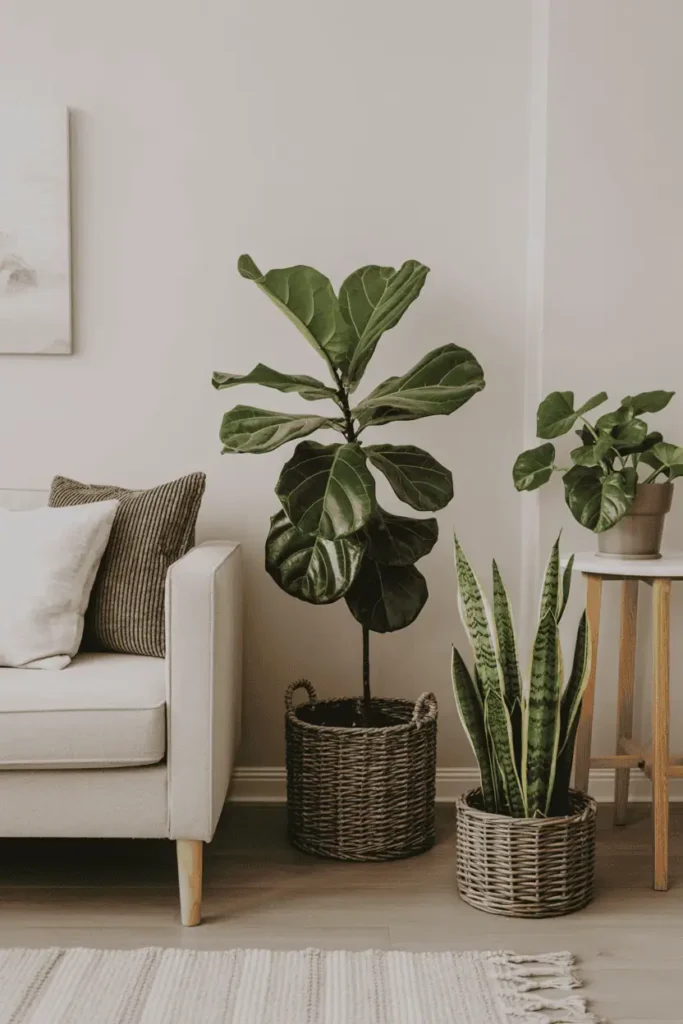
Plants breathe life into minimalist interiors. Against a backdrop of white walls and natural wood, greenery pops without overwhelming the room. Easy-care options like snake plants, pothos vines, and rubber trees are perfect.
Choose simple Scandinavian-style planters: matte ceramic, woven baskets, or wooden stands. Group plants of varying heights together for visual interest, or use one tall plant (like a fiddle leaf fig) as a statement piece.
Pro Tip: Plants with simple leaf shapes fit the Nordic aesthetic best — avoid overly ornate or tropical styles.
10. Use Stylish Storage Solutions
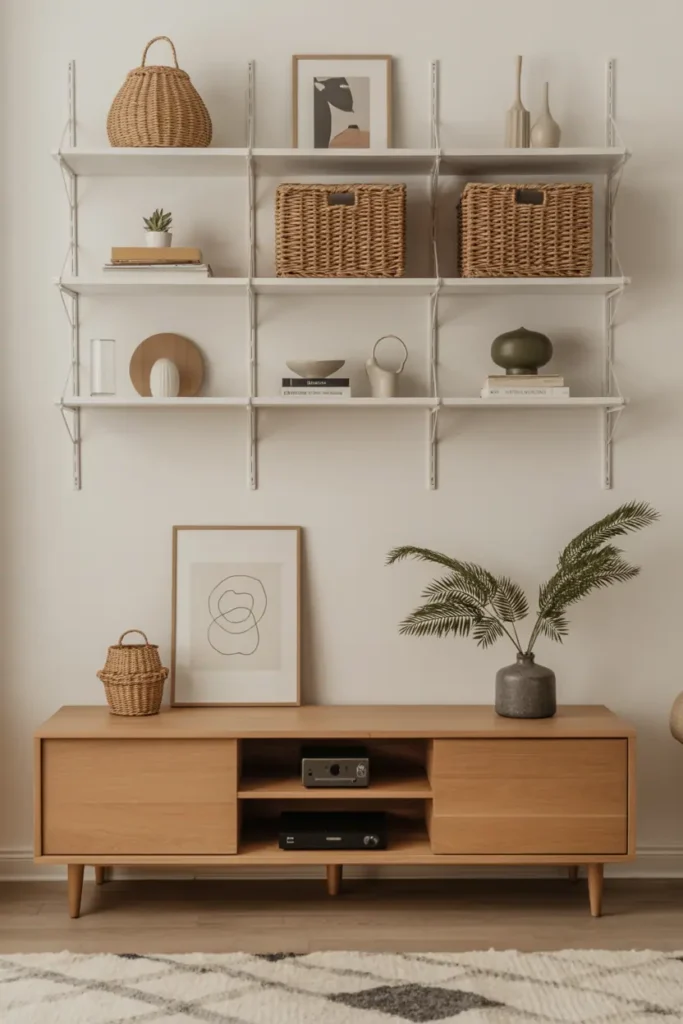
Scandinavian design embraces the principle of lagom — “just the right amount.” That means keeping things organized and clutter-free. Built-in shelves, floating units, and slim media consoles help maximize vertical space while keeping a clean look.
Woven baskets and seagrass bins are perfect for hiding blankets, toys, or magazines while adding texture. Storage ottomans and benches provide hidden compartments for smaller items.
Pro Tip: Follow the “one in, one out” rule — for every new item you add, remove something else to keep your space balanced.
11. Ground the Space with Flooring & Rugs
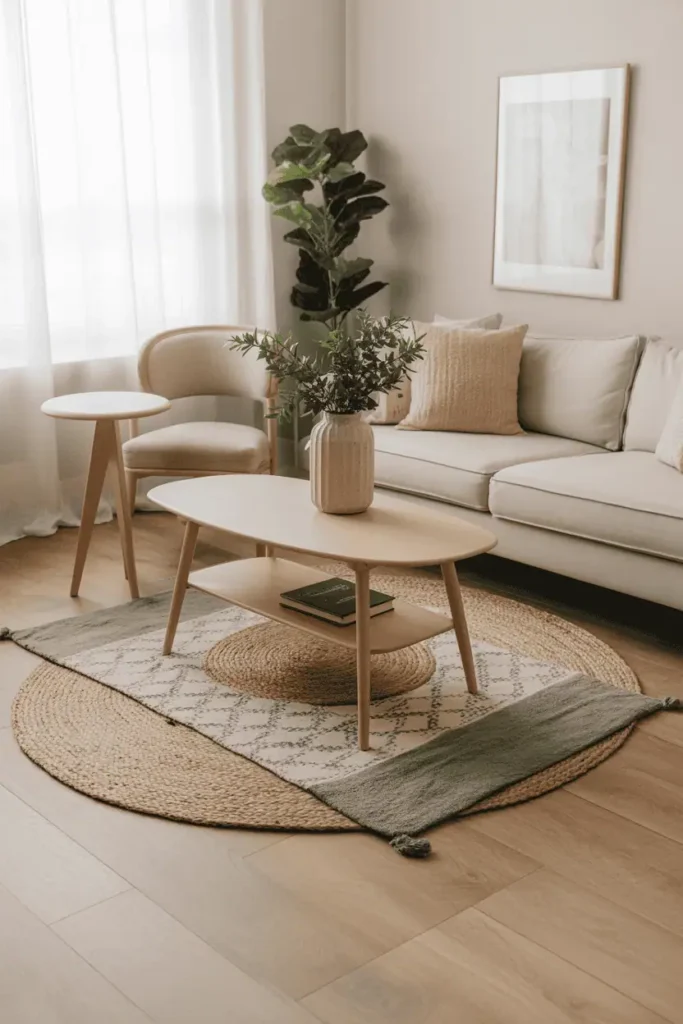
Flooring sets the stage for Scandinavian interiors. Blonde wood floors (oak, ash, pine) reflect light and add natural warmth. Pair them with large neutral rugs in wool, jute, or cotton for softness underfoot.
For extra texture, layer a smaller patterned rug (like a muted Moroccan or geometric design) over a larger natural fiber base. This technique defines seating areas while adding cozy character.
Pro Tip: Keep rugs large enough to fit under your main furniture — it visually anchors the space and avoids a “floating” look.
12. Create Intentional Focal Points
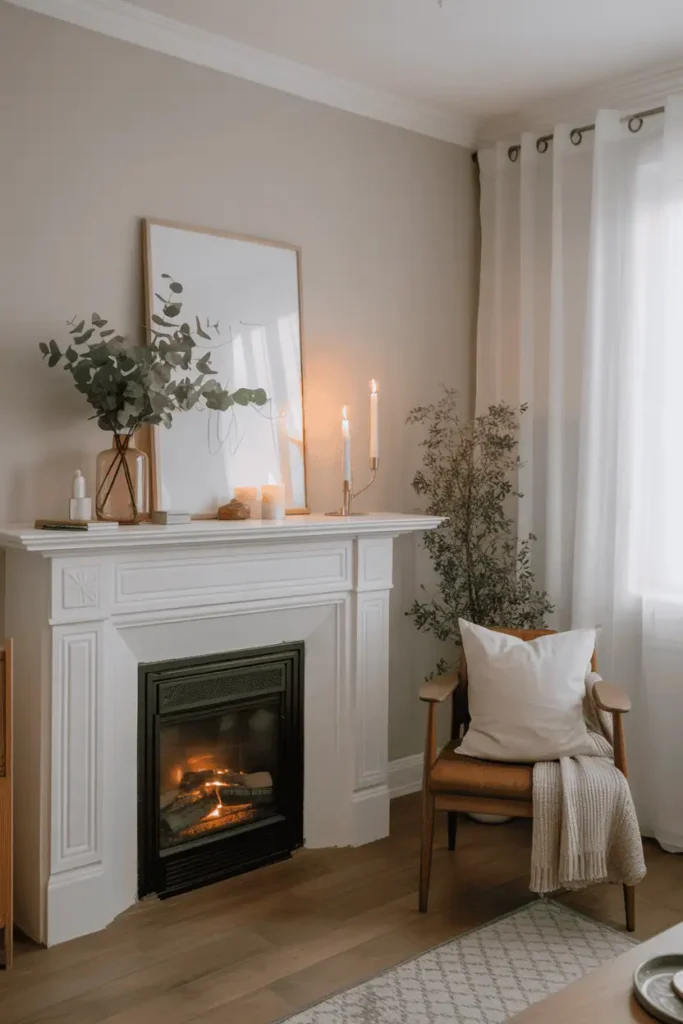
Scandinavian style avoids clutter but still allows for focal points. Choose one or two statement features, like a mid-century modern chair, a hygge reading nook, or a styled fireplace mantel.
Keep the styling minimal: a vase of greenery, a few candles, or a small stack of books. The key is restraint — every piece should feel intentional and contribute to harmony.
Pro Tip: Rotate decor seasonally (candles in winter, fresh flowers in summer) to keep your focal point fresh without overbuying.
Conclusion
Scandinavian living rooms aren’t just pretty — they’re practical, calming, and deeply connected to well-being. By layering textures, embracing natural materials, and keeping your palette light, you can create a space that feels both minimal and warm.
Start small — add a sheepskin throw, switch to linen curtains, or bring in a couple of plants. Over time, your room will evolve into a true Nordic sanctuary that reflects both your style and your lifestyle.
💡 “Want to go deeper? Don’t miss my Complete Guide to Designing a Scandinavian Living Room where I break down color palettes, hygge styling tips, and layout ideas in detail.”