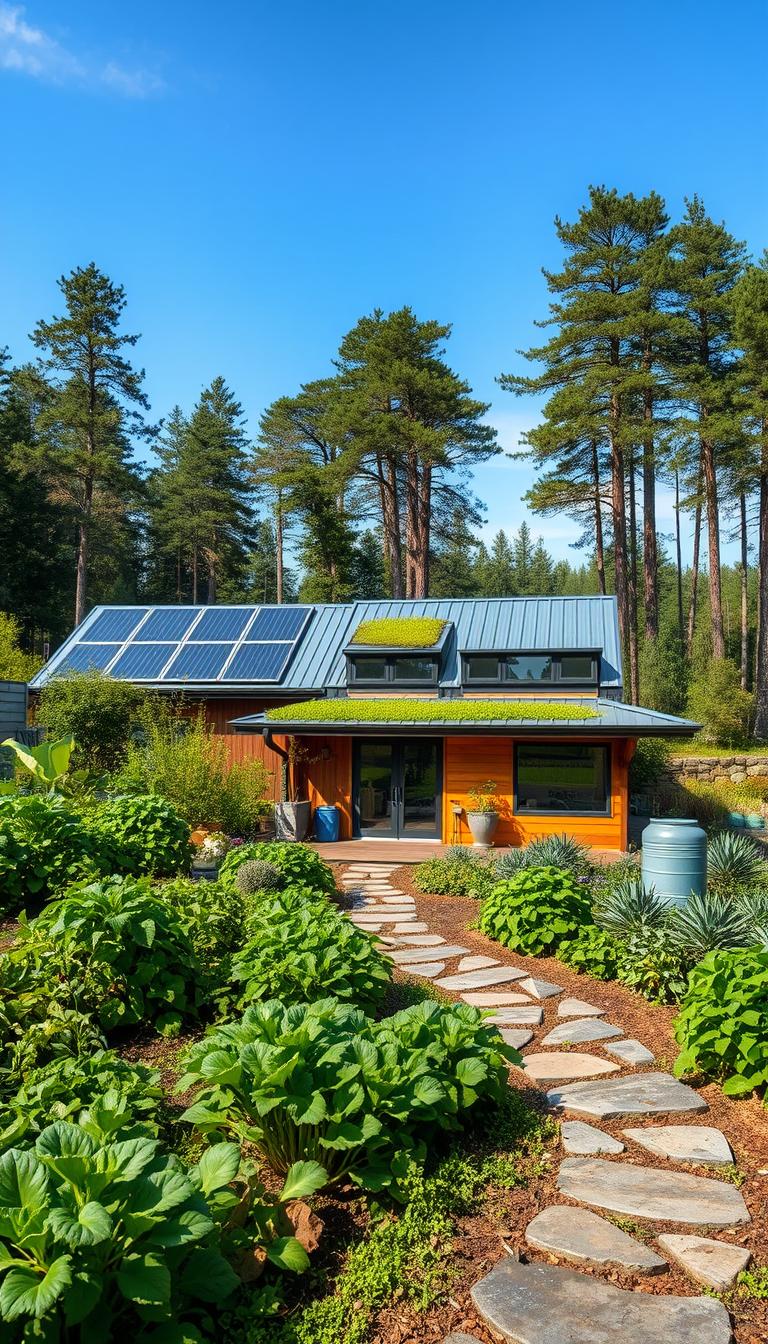
As we welcome a new year, many of us want to refresh our homes. We also want to be kind to the environment. Making eco-friendly home improvements is a great way to do this.
Let’s look at some easy ways to make your home more sustainable. By adding these sustainable home updates, you can make your home greener and more welcoming.
Key Takeaways
- Simple ways to make your home more eco-friendly
- Effective sustainable home updates for a fresh start
- Eco-friendly home improvements for a greener living space
- Practical tips for a sustainable home makeover
- Benefits of incorporating eco-friendly elements in your home
The Value of Sustainable Living in Modern Homes
The move towards sustainable living is changing how we live. It brings many benefits for our planet, our money, and our health. Making choices that reduce our impact on the environment helps us and the planet.
Environmental Impact of Traditional Housing
Traditional homes have a big impact on the environment. They use a lot of energy and create waste. Most homes use non-renewable energy, which harms our planet. We can make changes to lessen these effects.
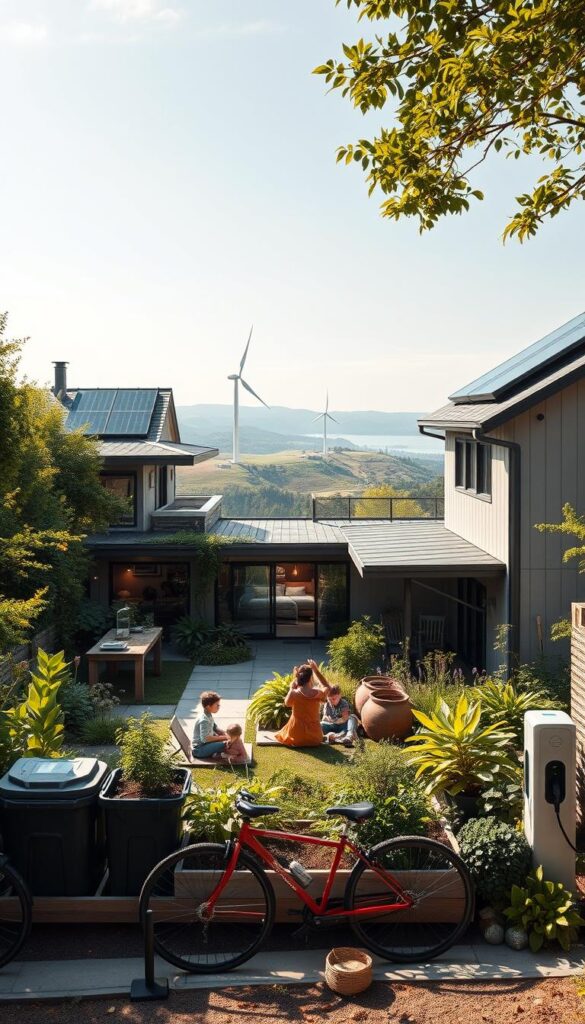
Financial Benefits of Eco-Friendly Homes
Eco-friendly homes save money and increase their value. Using energy-efficient appliances and smart tech cuts down on bills. They also attract buyers, making them more valuable.
Health Advantages of Sustainable Living Spaces
Sustainable homes are healthier. They have better air and fewer harmful chemicals. Choosing non-toxic materials and better ventilation improves our health. This makes our homes better places to live.
Choosing sustainable living makes our homes better for us and the planet. It saves money and improves our health.
Evaluating Your Home’s Sustainability Footprint
Trying to make our homes more sustainable starts with understanding our current impact. We need to see where we can make big changes.
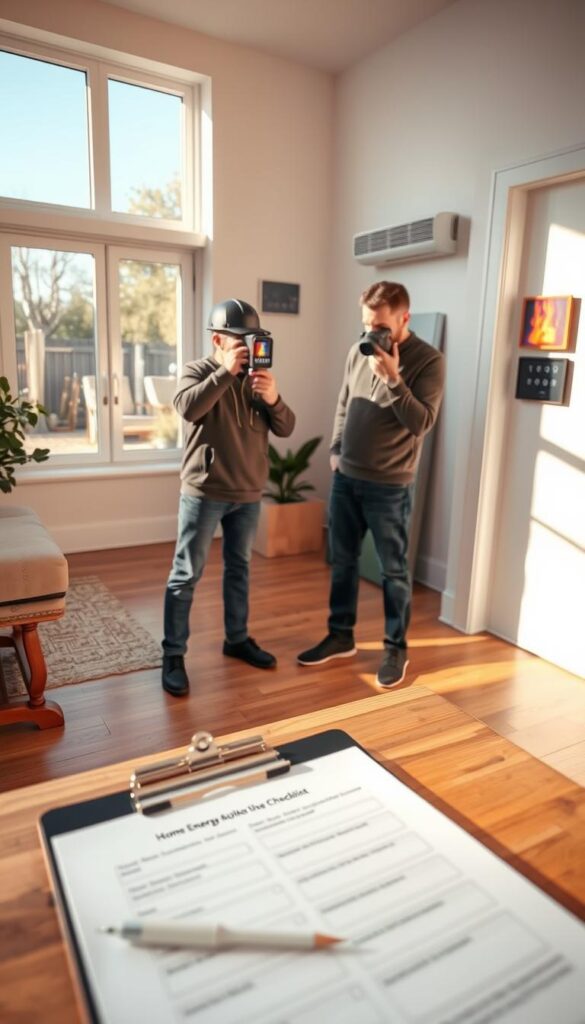
DIY Home Energy Assessment Techniques
Starting with a DIY home energy check is a smart move. You can do simple things like:
- Checking for air leaks around doors and windows
- Inspecting insulation in attics and walls
- Reviewing past utility bills to identify patterns
Professional Energy Audit Options
For a deeper look, think about getting a professional energy audit. They’ll use special tools to:
- Detect energy leaks and inefficiencies
- Provide recommendations for improvement
Prioritizing Areas for Improvement
After getting your assessment, pick the most important areas to work on. Look for changes that save a lot of energy and money, like new appliances or better insulation.
Quick and Affordable Sustainable Home Updates
Sustainable living is within reach, even on a budget. Making a positive impact on the environment doesn’t have to be expensive or time-consuming. We can start with simple, cost-effective measures that make a significant difference.
Weekend Projects Under $100
One of the easiest ways to begin your sustainable journey is by undertaking weekend projects that won’t break the bank. For under $100, you can install low-flow showerheads or switch to energy-efficient light bulbs. This can significantly reduce your water and energy consumption.
Simple Habit Changes for Immediate Impact
Changing your daily habits can have an immediate and significant impact on your home’s sustainability. Simple actions like turning off lights when not in use, using eco-friendly cleaning products, and reducing water waste can make a big difference.
Low-Cost Smart Home Integrations
Integrating low-cost smart home devices is another effective way to enhance your home’s sustainability. Devices like smart thermostats and energy monitors can help optimize your energy usage. They provide insights into your consumption patterns and suggest ways to improve efficiency.
By implementing these affordable sustainable home updates, you can significantly reduce your environmental footprint without straining your budget.
Energy-Efficient Upgrades Worth the Investment
Energy-efficient upgrades are good for the planet and save money. Homeowners look for ways to make their homes green without spending too much. One smart move is to invest in energy-saving upgrades.
ENERGY STAR Appliance Replacements
Switching to ENERGY STAR appliances cuts down on energy use. These appliances work well and use less power. They’re perfect for those who care about the environment.
- Reduced energy consumption
- Lower utility bills
- Enhanced appliance performance
The U.S. Environmental Protection Agency (EPA) says ENERGY STAR appliances save energy and water. They also cut down on utility bills.
Smart Thermostat and HVAC Optimization
Getting a smart thermostat and improving your HVAC system saves a lot of energy. Smart thermostats adjust the temperature based on your habits. This keeps your home comfy and saves energy.
| Feature | Benefit |
|---|---|
| Smart Scheduling | Optimizes heating and cooling based on your schedule |
| Energy Reports | Provides insights into your energy usage |
| Remote Access | Allows you to control your thermostat from anywhere |
LED Lighting Conversion Strategies
Switching to LED lights is a simple way to use less energy. LEDs use less power and last longer than old bulbs.
Fixture Selection Guide
When picking LED lights, think about lumens, color temperature, and if they can be dimmed. Lumens show how bright the light is. Color temperature sets the mood. Dimmability lets you adjust the light level.
Optimal Placement for Maximum Efficiency
Put LED lights where they’re most needed. Use task lighting for specific spots like reading or cooking.
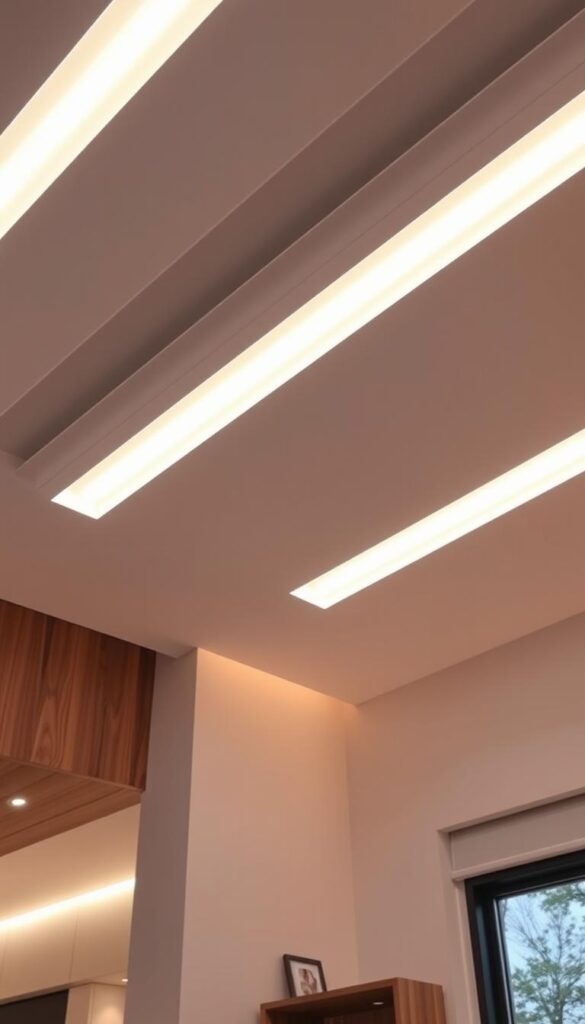
By using these energy-saving upgrades, homeowners can use less energy, save on bills, and help the planet.
Water Conservation Solutions for Every Budget
Conserving water is key for a sustainable future. There are many solutions for different budgets. Homeowners can make a big difference with simple water-saving steps.
Low-Flow Fixtures and Aerators
Installing low-flow fixtures and aerators is an easy way to save water. These devices cut down water use without losing quality. Upgrading to these can greatly lower our water use.
- Low-flow showerheads can save up to 2.5 gallons of water per minute.
- Faucet aerators can reduce water flow by up to 60%.
Greywater Systems for Home Gardens
Greywater systems are great for saving water. They collect and treat wastewater from sinks, showers, and washing machines. This water can then be used for irrigation, cutting down on potable water use.
Smart Irrigation Controls
Smart irrigation controls help use water wisely in gardens and landscapes. They use weather data and soil moisture sensors to adjust watering schedules. This ensures plants get the right water at the right time.
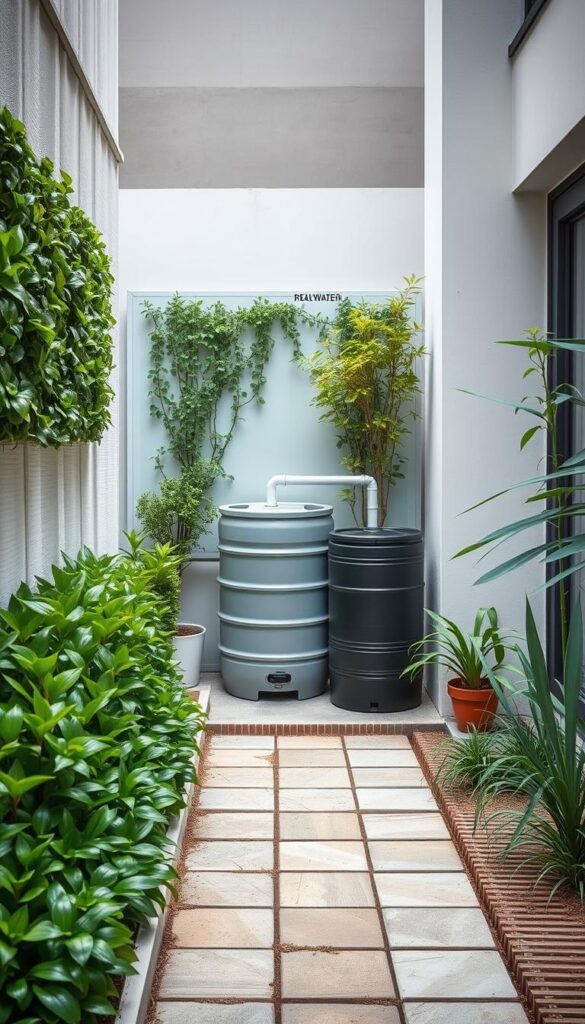
Rainwater Collection Systems
Rainwater collection systems are a simple way to save water. They collect and store rainwater for irrigation. This reduces our need for municipal water and cuts down on stormwater runoff.
By using these water-saving solutions, we can greatly reduce our water use. This helps make our future more sustainable.
Sustainable Materials for Home Renovation Projects
Eco-friendly materials are key to a greener future in home renovations. They help reduce our environmental impact and make homes healthier. It’s vital to pick sustainable materials when renovating.
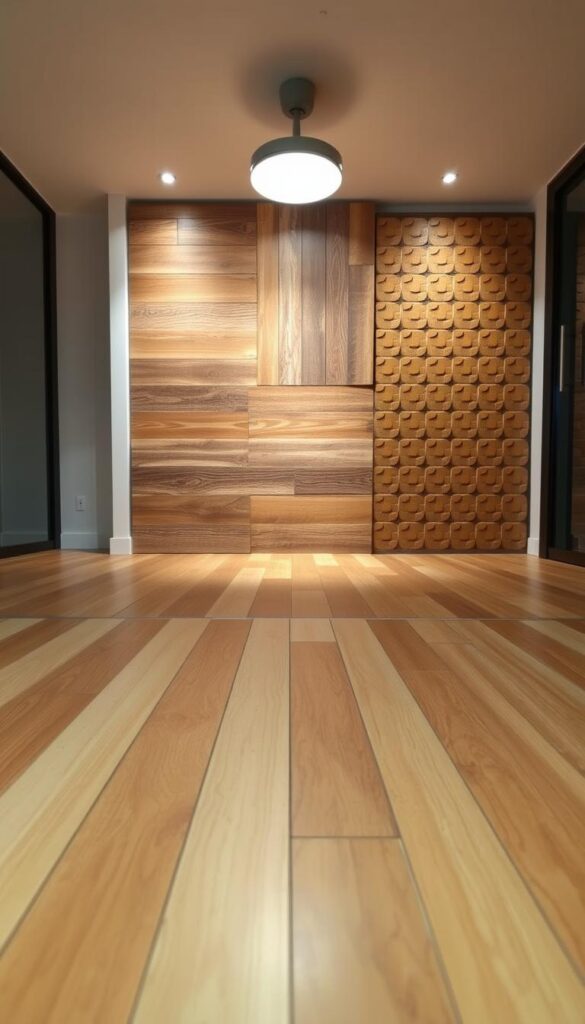
Eco-Friendly Flooring Alternatives
There are many eco-friendly flooring options. They’re good for the planet and add charm to your home.
Bamboo and Cork Options
Bamboo flooring is a top choice because it grows fast. Cork flooring comes from trees without harming them. It’s durable and comfy.
Reclaimed Wood Sources
Using reclaimed wood for floors is smart. It cuts down waste and tells a story. You can find it in old barns and factories.
Non-Toxic Paints and Finishes
Choosing the right paints and finishes is key for clean air inside. Non-toxic paints have no harmful VOCs. They’re better for your family and the planet.
- Look for paints labeled as “low-VOC” or “VOC-free.”
- Opt for natural finishes like wax or oil-based products.
Recycled and Upcycled Building Materials
Using recycled and upcycled materials cuts down waste. You can use recycled glass for countertops and turn old pallets into furniture.
- Visit local salvage yards to find unique materials.
- Consider donating materials you no longer need to local charities or online platforms.
Choosing sustainable materials for your home renovation helps the planet. It also makes your home unique and special.
Creating a Zero-Waste Living Environment
Let’s make our homes zero-waste havens with simple changes. To achieve this, we need to reduce, reuse, and recycle. A few easy steps can greatly cut down our waste.
Kitchen Composting Systems
Using a kitchen composting system is a big step in reducing waste. It helps cut down landfill waste and makes great soil for our gardens. We can use compost bins or worm composters to make food scraps useful.
Plastic-Free Storage Solutions
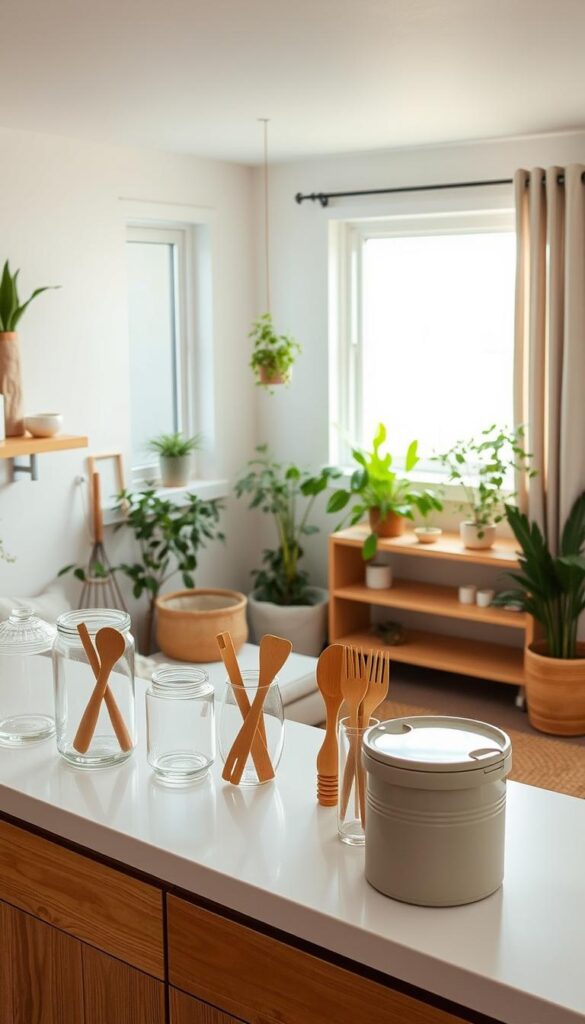
Choosing plastic-free storage is another smart move. We can use glass containers or beeswax wraps for food and other items. This helps us avoid single-use plastics.
Sustainable Shopping Practices
Good shopping habits are key to less waste. We can buy in bulk, pick items with less packaging, and skip single-use items. Making smart choices can really cut down our waste.
Repurposing and Upcycling Household Items
Upcycling is a fun way to give old items new life. We can turn jars into planters, make cleaning products, or fix old furniture. It’s good for the planet and makes our homes special.
| Strategy | Benefits | Simple Steps |
|---|---|---|
| Kitchen Composting | Reduces landfill waste, creates nutrient-rich soil | Use compost bins or worm composters |
| Plastic-Free Storage | Reduces plastic use, safe for food storage | Switch to glass containers or beeswax wraps |
| Sustainable Shopping | Reduces packaging waste, promotes eco-friendly products | Buy in bulk, choose minimal packaging |
By following these tips, we can make our homes greener. Let’s start our journey to a zero-waste home today.
Sustainable Home Updates That Deliver ROI
Investing in sustainable home updates is good for the planet and your wallet. It’s key to know which updates give the best financial return. This helps us live greener and save money.
Solar Energy Installation Options
Installing solar energy systems is a big step. It cuts down on fossil fuel use and lowers energy bills. You can pick from rooftop panels or solar shingles, based on your home’s look and energy needs.
High-Performance Insulation Upgrades
High-performance insulation is another smart choice. It keeps your home warm in winter and cool in summer. This means less energy use and lower bills. You can choose from spray foam, fiberglass, or reflective insulation, each with its own benefits.
Energy-Efficient Window Replacements
New, energy-efficient windows are a great upgrade. They help keep your home warm in winter and cool in summer. Look for windows with low-E coatings and double or triple glazing for the best results.
Smart Home Energy Management Systems
Smart home energy systems are smart. They watch and control your energy use in real-time. They work well with solar systems, smart thermostats, and other smart devices to save energy and money.
| Update | Key Benefits | Potential ROI |
|---|---|---|
| Solar Energy Installation | Reduced energy bills, lower carbon footprint | Up to 100% ROI |
| High-Performance Insulation | Lower energy consumption, improved comfort | 30-50% ROI |
| Energy-Efficient Windows | Reduced energy loss, improved home value | 70-90% ROI |
| Smart Home Energy Management | Optimized energy usage, real-time monitoring | 20-30% ROI |
By choosing these sustainable updates, homeowners can save money and help the planet. It’s a win-win for everyone.
Indoor Air Quality Improvements for Healthier Living
Improving indoor air quality is key to a healthier home. We’ll show you how to do it. By making a few simple changes, you can make your home’s air much better.
Air-Purifying Plant Selection
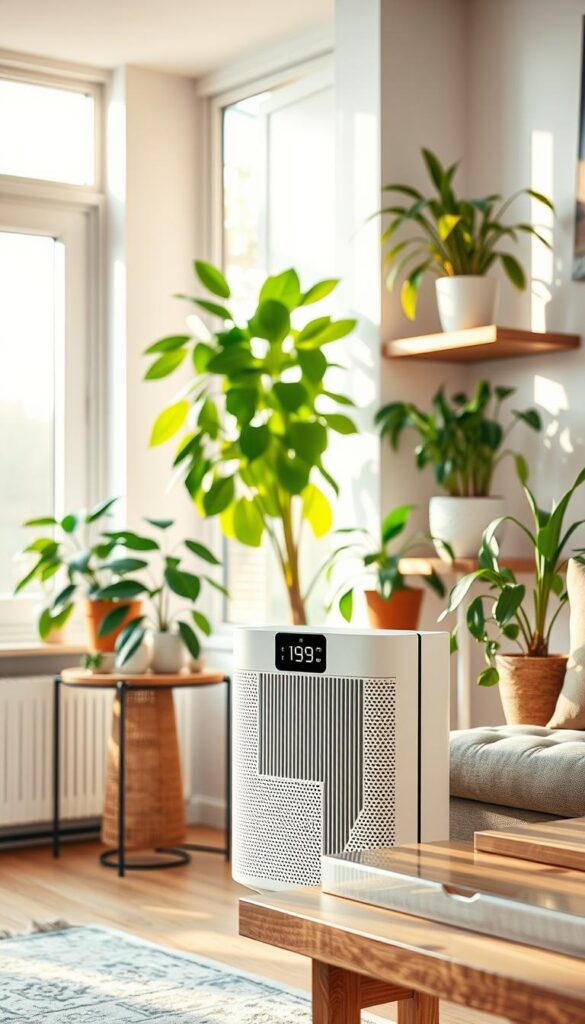
Adding air-purifying plants is a great way to clean the air. Plants like spider plants, peace lilies, and snake plants remove pollutants. Let’s look at some plants that fit your home’s style.
- Spider plants: Easy to care for and great for hanging baskets
- Peace lilies: Elegant and effective at removing toxins
- Snake plants: Low maintenance and perfect for bedrooms
Natural Cleaning Product Alternatives
Choosing natural cleaning products is another way to improve air quality. Many regular cleaners have harsh chemicals that harm the air. Choosing eco-friendly cleaners helps keep your air clean and your home healthy.
Some great natural cleaners include vinegar, baking soda, and essential oils. They work well and are safe for your home and the planet.
Ventilation System Enhancements
Improving your ventilation system is important for clean air. Good ventilation removes old air and brings in fresh air. Think about getting a high-efficiency ventilation system or adding fans.
Air Quality Monitoring Devices
Air quality monitors help you track your home’s air. They detect pollutants and alert you to air quality changes. Smart air quality monitors offer real-time data and insights.
With these tips, you can greatly improve your home’s air quality. This makes your home healthier and more comfortable.
Financing Your Sustainable Home Updates
Sustainable living is now easier to achieve, thanks to various financing options. Homeowners can use these options to make their eco-friendly upgrades more affordable. This way, they can reduce their environmental impact.
Federal and State Tax Incentives
The U.S. government has tax incentives for eco-friendly home updates. These incentives can lower the cost of projects like solar panels and energy-efficient appliances. For instance, the Residential Renewable Energy Tax Credit lets homeowners claim up to 26% of solar panel costs.
Energy-Efficiency Rebate Programs
Utility companies and states offer rebates for energy-saving home upgrades. These rebates can help save money on items like LED lights, smart thermostats, and energy-efficient appliances. Homeowners should check with their local providers for available rebates.
Green Home Improvement Loans
There are loans designed for green home improvements. These loans often have better terms, like lower interest rates and longer payback periods. Examples include FHA Energy Efficient Mortgages and PACE financing programs.
Phased Implementation Strategies
Homeowners can use phased strategies to make updates more affordable. This means focusing on the most important and cost-effective updates first. Then, they can spread out the work over time. This approach helps avoid big upfront costs.
- Begin with low-cost updates like energy-efficient lighting and smart home devices.
- Focus on updates that are both needed and impactful, such as insulation and windows.
- Look into financing options like tax incentives, rebates, and green loans to help cover costs.
Conclusion: Embracing Sustainable Living Beyond Home Updates
Our journey into sustainable living goes beyond just home updates. By adopting a green mindset, we can make a big difference. This approach helps us live in harmony with the environment.
We’ve looked at many ways to green up our homes. From using less energy to choosing eco-friendly materials, the options are endless. Now, let’s think about how we can live greener every day. Simple actions like using less energy or buying local can really help.
Together, we can build a better future. Let’s keep finding ways to lessen our impact on the planet. Every small action we take is a step in the right direction.